

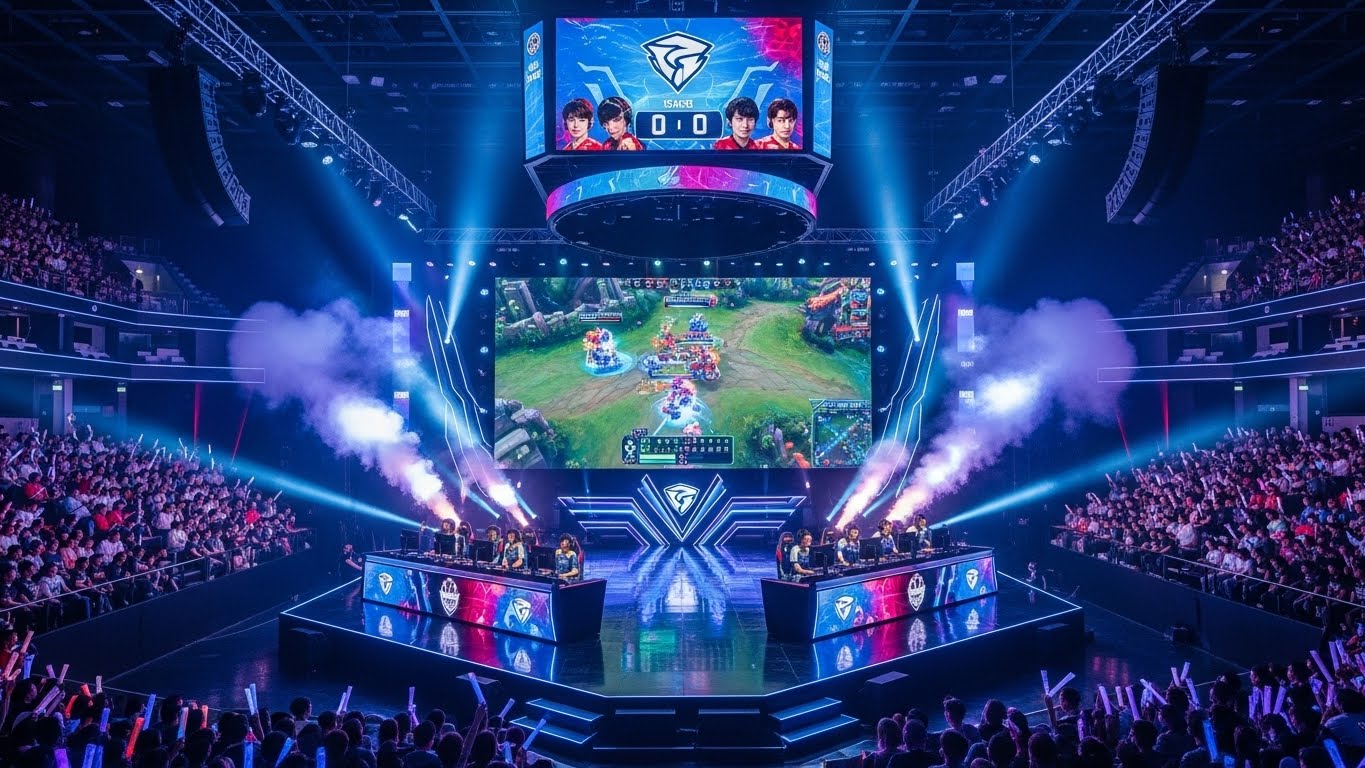
Esports has come a long way from its humble beginnings in the late 20th century, transforming into a global phenomenon that now boasts millions of fans, players, and billions of dollars in revenue. Competitive gaming, once a niche hobby for tech enthusiasts, has become an entire industry, encompassing professional leagues, tournaments, streaming platforms, sponsorships, and even career opportunities. But what exactly is esports, and how did it evolve into such a massive global entity? In this blog post, we will explore the rise of esports, its current impact on the gaming and entertainment sectors, and what the future holds for competitive gaming.
What Is Esports?
Esports, short for “electronic sports,” refers to organized, multiplayer video game competitions, particularly between professional players, individually or as teams. Unlike casual gaming, which is often played for leisure, esports involves a competitive environment with significant stakes, including cash prizes, sponsorships, and national or international recognition. The games played in esports vary from real-time strategy (RTS) games like StarCraft II to first-person shooters (FPS) like Counter-Strike: Global Offensive (CS:GO) and Overwatch, to multiplayer online battle arena (MOBA) games like League of Legends and Dota 2.
Esports has moved beyond simply being a “gaming event” into a massive entertainment industry in its own right. With professional teams, coaches, analysts, commentators, and streamers, esports mirrors the traditional sports industry in terms of structure and scale, albeit within the digital realm.
The Origins and Evolution of Esports
The origin of esports can be traced back to the early 1990s when gaming tournaments first began to appear on the scene. One of the first major tournaments was the Red Annihilation tournament for the game Quake, held in 1997, where the winner received a Ferrari. Though this event was significant, it was still relatively small-scale compared to the esports tournaments we see today.
As the internet spread and broadband connections improved in the early 2000s, online multiplayer games like Warcraft III and Counter-Strike began to thrive. The rise of esports was further fueled by platforms like Twitch, which was launched in 2011 and quickly became the go-to streaming service for gamers worldwide. Gamers could not only watch live broadcasts of tournaments but also stream their own gameplay to global audiences.
By the mid-2010s, esports was a full-fledged industry with sponsorship deals from major brands like Coca-Cola, Intel, and Red Bull, and mainstream media attention from outlets like ESPN and BBC. Large-scale tournaments with prize pools in the millions, such as The International (the world championship for Dota 2), began to solidify esports as a legitimate form of competition and entertainment.
Esports as a Global Phenomenon
One of the defining aspects of esports is its global reach. Unlike traditional sports, which are often region-specific or have limited international appeal, esports transcends geographical boundaries. Players from all around the world can compete against each other regardless of where they are based, making it an inclusive and diverse space. Tournaments like League of Legends World Championship and CS:GO Major Championships attract competitors from every corner of the globe, often with millions of viewers tuning in to watch the live streams.
This global appeal has been further enhanced by the rise of platforms like Twitch, YouTube Gaming, and Facebook Gaming, which provide live-streaming capabilities and create a direct connection between players and fans. The ability to watch live competitions, interact with players, and engage in community discussions has contributed to the explosive growth of esports, especially among younger audiences.
In addition to the tournaments themselves, esports has become a significant part of the pop culture landscape. Major celebrities, musicians, and influencers have endorsed esports, further legitimizing it as a mainstream form of entertainment. Some professional athletes, such as NBA player Shaquille O’Neal, have even invested in esports organizations and teams, further blurring the line between traditional sports and esports.
The Business Side of Esports
Esports is not just about the players; it’s also a major business. The industry is worth billions of dollars, driven by sponsorships, advertising, media rights, merchandise sales, and the growing popularity of streaming platforms. According to industry estimates, the global esports market is expected to surpass $1.5 billion in revenue by 2025.
One of the most significant revenue streams for esports organizations is sponsorship. Just like traditional sports teams, esports teams have sponsorship deals with major companies that provide financial support in exchange for brand exposure. The esports sponsorship market is expected to see exponential growth, with companies from outside the gaming space – including tech, automotive, and food brands – becoming increasingly involved.
Media rights are another critical revenue source. Just as television networks pay for the rights to broadcast traditional sports, esports organizations and event organizers sell broadcast rights to major media outlets. Platforms like Twitch and YouTube Gaming have also become essential parts of the media rights ecosystem. This has led to the rise of exclusive broadcasting deals, where companies secure the rights to air particular tournaments or leagues, further contributing to the financial viability of the esports ecosystem.
Finally, the growing popularity of esports has paved the way for new job opportunities, including professional players, coaches, analysts, tournament organizers, and content creators. The increasing demand for esports-related content has led to the rise of content creators and influencers, many of whom have built massive followings on platforms like Twitch and YouTube. These influencers often make money through ads, subscriptions, sponsorships, and fan donations, and some have even become household names in the gaming world.
The Impact of Esports on Traditional Sports
Esports has had a significant impact on traditional sports, both as a form of entertainment and as a business model. One of the primary ways esports has influenced traditional sports is through the concept of “franchising.” In esports, certain leagues – like the Overwatch League and the Call of Duty League – operate with a franchise model, similar to professional sports leagues like the NBA or NFL. Teams are owned by investors and can compete in a league structure with regular seasons, playoffs, and championship events. This structure is designed to create stability and long-term financial success, much like traditional sports leagues.
In addition to franchising, traditional sports organizations are increasingly investing in esports. The NBA, for example, has its own esports league called the NBA 2K League, and many major soccer clubs, such as Manchester City and Paris Saint-Germain, have their own esports teams. This trend demonstrates that traditional sports teams are recognizing the potential of esports as a new revenue stream and fan engagement tool.
Moreover, the growing overlap between esports and traditional sports has led to a more diverse fan base. Many fans of traditional sports are also becoming interested in esports, while esports fans are gaining exposure to traditional sports. This cross-pollination of fan bases is likely to continue, fostering greater collaboration and innovation between the two sectors.
The Future of Esports
The future of esports is incredibly exciting, with new technologies and innovations on the horizon. One of the most significant areas of development is the integration of Virtual Reality (VR) and Augmented Reality (AR) into esports. As VR and AR technology becomes more accessible and advanced, esports events could become even more immersive, offering viewers a chance to experience competitions in entirely new ways. Fans could “sit” courtside at a virtual arena or watch a game from a first-person perspective, blurring the lines between spectator and participant.
Another area where esports is poised for growth is in its inclusion in traditional sporting events, such as the Olympics. While esports was not included in the 2020 Summer Olympics, discussions are ongoing about its potential inclusion in future Olympic Games. This could serve as a major milestone for esports, establishing it as a globally recognized and respected form of competition.
Additionally, as the industry continues to grow, there is an increasing emphasis on improving the mental and physical well-being of players. Just like traditional athletes, esports players face intense pressure, long hours, and the potential for burnout. As the esports industry matures, we can expect more resources to be dedicated to player health, from mental health support to physical training and recovery programs.
Conclusion
Esports has evolved from a niche pastime into a multibillion-dollar global industry, attracting millions of players and fans worldwide. With its growing popularity, esports has become an essential part of the entertainment landscape, shaping the future of competitive gaming and offering new opportunities for players, fans, and investors alike. As the industry continues to evolve, it will be exciting to see how esports further integrates into mainstream culture, transcending the digital realm and influencing the way we experience sports and entertainment. Whether you’re a hardcore gamer or a casual spectator, the world of esports is one that continues to thrive, offering a unique and exciting space where competition, passion, and technology collide.