

Introduction
Esports, short for electronic sports, has transformed from a niche hobby into a multi-billion-dollar industry, capturing the attention of millions of fans worldwide. Once considered a pastime for a small group of gaming enthusiasts, esports now commands massive audiences, attracts corporate sponsorships, and offers professional players lucrative careers. The evolution of competitive gaming reflects broader trends in technology, entertainment, and youth culture, making it one of the most fascinating modern phenomena.
The Origins of Esports
The roots of esports trace back to the late 1970s and 1980s, when simple arcade games like Space Invaders and Pac-Man started inspiring competitive play. Early competitions were often informal, taking place in arcades or small local gatherings. The 1990s marked a turning point with the advent of networked PC gaming. Titles like Doom, Quake, and StarCraft allowed players to compete over local networks or the early internet, laying the groundwork for organized tournaments.
One pivotal moment in esports history came in 1997 with the Red Annihilation Quake tournament, which awarded the winner a Ferrari. This event highlighted the potential of competitive gaming to captivate audiences and attract sponsorship, setting a precedent for future esports events.
Esports as a Career
Unlike casual gaming, esports offers the opportunity to pursue competitive gaming as a professional career. Players dedicate hours each day to training, strategizing, and analyzing opponents, similar to traditional athletes. Professional teams have coaches, analysts, and support staff to optimize performance.
Salaries for top-tier esports players can be substantial. In addition to base salaries, players often earn revenue from tournament winnings, streaming, endorsements, and merchandise. Esports also opens doors to careers beyond playing, including coaching, content creation, tournament organization, and esports journalism. This professional ecosystem continues to expand as esports gains legitimacy in mainstream culture.
Popular Esports Titles
The esports landscape is diverse, encompassing a wide variety of game genres. Each game offers a unique set of skills, strategies, and audience appeal.
Multiplayer Online Battle Arena (MOBA)
MOBA games like League of Legends and Dota 2 have massive global followings. In these games, two teams of players compete to destroy the opposing team’s base while managing resources, coordinating strategies, and executing precise mechanics. Tournaments for these titles often attract millions of viewers, with prize pools reaching tens of millions of dollars.
First-Person Shooters (FPS)
FPS games such as Counter-Strike: Global Offensive, Call of Duty, and Valorant focus on reflexes, precision, and teamwork. FPS esports requires quick decision-making, map awareness, and highly coordinated team play. These games dominate both online streaming platforms and live events, often featuring intense rivalries and dramatic matches.
Fighting Games
Fighting games, including Street Fighter, Tekken, and Super Smash Bros., highlight individual skill and fast-paced competition. Esports tournaments for fighting games, often known as the fighting game community (FGC), emphasize one-on-one matches and showcase technical mastery, mind games, and adaptability.
Sports Simulations
Virtual sports games like FIFA, NBA 2K, and Madden NFL have carved out a niche in esports, blending traditional sports fandom with competitive gaming. Players demonstrate tactical knowledge and precision in simulated sporting environments, attracting both gaming enthusiasts and traditional sports fans.
The Role of Streaming in Esports
Streaming platforms like Twitch and YouTube Gaming have revolutionized how esports content is consumed. Fans can watch live matches, follow their favorite players, and engage with communities in real-time. Streaming also allows professional players to build personal brands, generate additional income, and connect directly with fans.
The accessibility of streaming has democratized esports viewership. People no longer need to attend live events or subscribe to cable channels to follow competitive gaming. The interactive nature of streaming, with chat features and community engagement, has strengthened the global esports ecosystem.
Esports Events and Tournaments
Esports events vary in scale, from local competitions to global championships. Major tournaments often fill arenas, drawing thousands of live spectators while millions watch online.
Local and Regional Tournaments
These tournaments serve as the foundation of competitive gaming, providing a platform for emerging talent. Local competitions are often sponsored by gaming centers, educational institutions, or community organizations, helping to nurture grassroots esports culture.
National and International Championships
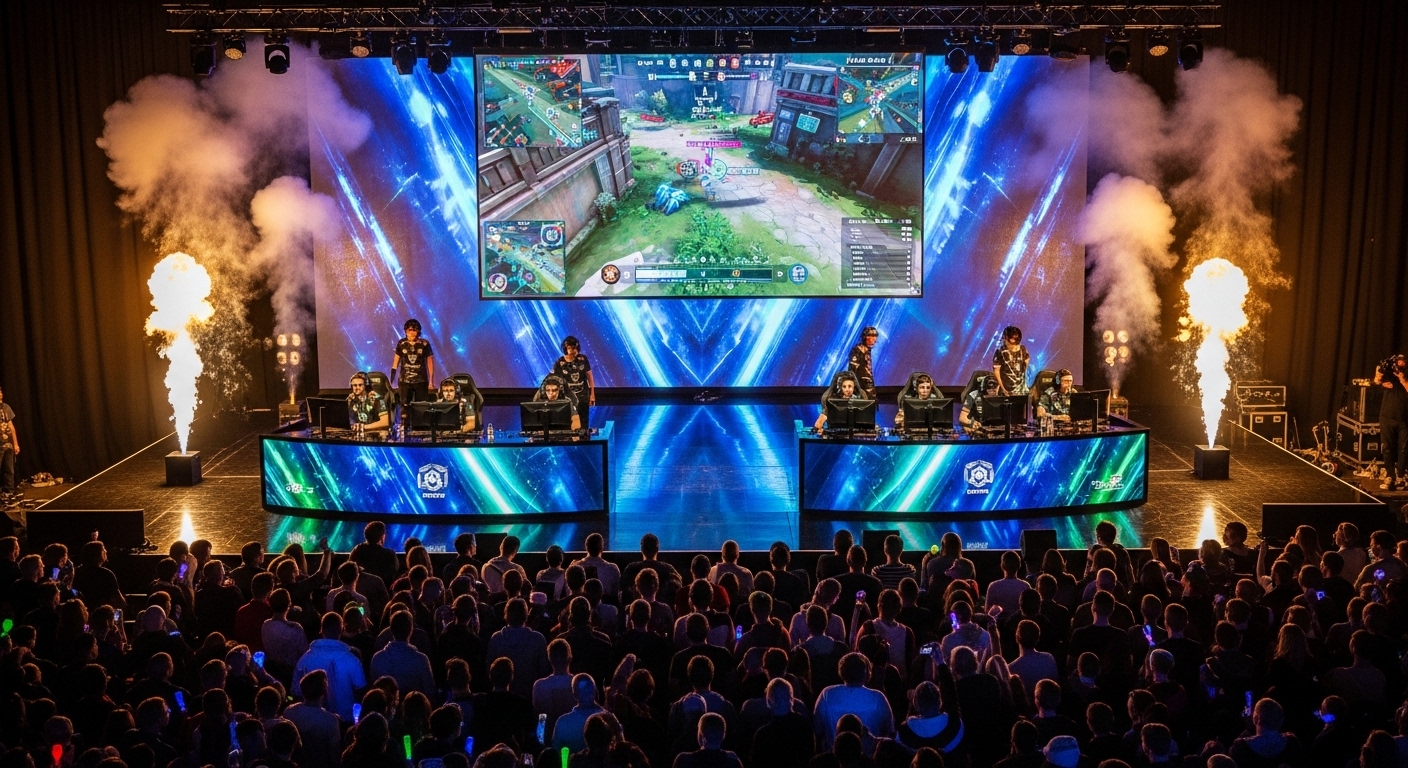
National leagues and international tournaments have elevated esports to mainstream prominence. Events like the League of Legends World Championship and The International Dota 2 Championship offer multimillion-dollar prize pools and attract global audiences. The production quality rivals traditional sports broadcasts, with professional commentators, elaborate stage setups, and cinematic presentations.
Collegiate Esports
Universities and colleges have embraced esports, offering scholarships and competitive leagues for students. Collegiate esports programs provide structured pathways for aspiring professional players while integrating esports into higher education and academic frameworks.
The Economic Impact of Esports
Esports is a significant economic driver. Beyond player salaries and prize pools, the industry generates revenue from sponsorships, advertising, merchandising, ticket sales, and media rights. Major brands across technology, fashion, automotive, and consumer goods sectors have invested heavily in esports sponsorships, recognizing the opportunity to reach a young, engaged, and global audience.
The economic ecosystem also supports peripheral industries, including event management, content production, game development, and hardware manufacturing. Gaming peripherals such as high-end monitors, keyboards, and gaming chairs have surged in popularity due to esports influence.
Esports and Technology
Advances in technology have been central to the growth of esports. High-speed internet, powerful gaming hardware, and sophisticated software have enabled competitive gaming at an unprecedented level. Esports also drives innovation in areas like streaming technology, virtual reality, artificial intelligence, and game analytics.
Data analysis has become crucial for professional teams. Player performance metrics, opponent tendencies, and in-game statistics are meticulously tracked to inform strategies and optimize outcomes. Technology not only enhances competition but also improves spectator experience through real-time stats, instant replays, and immersive broadcasts.
The Social and Cultural Impact of Esports
Esports has reshaped social and cultural norms around gaming. It challenges the stereotype of gaming as a solitary or purely recreational activity, emphasizing skill, teamwork, and professionalism.
Online communities and fan cultures are integral to esports. Social media, forums, and Discord servers facilitate interaction between players, fans, and industry stakeholders. Esports also fosters global connections, bringing together people from diverse cultures and backgrounds around shared interests.
Furthermore, esports is influencing mainstream entertainment. Collaborations with music artists, crossover events with movies, and appearances in major media outlets have solidified esports’ presence in popular culture.
Challenges Facing Esports
Despite its rapid growth, esports faces several challenges.
Player Health and Wellbeing
Intense training schedules can lead to physical and mental health issues, including repetitive strain injuries, sleep deprivation, and burnout. Organizations are increasingly emphasizing player wellness programs, counseling services, and structured rest periods to mitigate these risks.
Regulation and Governance
Esports lacks a unified governing body, leading to inconsistencies in rules, tournament standards, and player rights. Efforts are underway to establish more standardized frameworks for fair competition, contracts, and dispute resolution.
Accessibility and Inclusion
While esports is theoretically accessible to anyone with a computer or console, barriers remain. Economic disparities, gender inequality, and regional limitations can restrict participation. Promoting inclusivity and equal opportunities remains a critical challenge for the industry.
The Future of Esports
The future of esports is promising, with continued growth anticipated in viewership, revenue, and professional opportunities. Emerging technologies like virtual reality and augmented reality could revolutionize gameplay and spectator experiences. Mobile esports is expanding rapidly, particularly in regions where console or PC gaming is less prevalent.
Educational institutions may further integrate esports into curricula, and traditional sports organizations are increasingly investing in esports divisions. The blurring of lines between traditional sports, entertainment, and esports suggests a future where competitive gaming is fully recognized as a mainstream form of athleticism and entertainment.
Conclusion
Esports has evolved from humble beginnings in arcades and small LAN parties to a global cultural and economic force. It offers professional opportunities, entertains millions, drives technological innovation, and fosters global communities. While challenges remain in regulation, health, and inclusivity, the trajectory of esports points toward continued growth and mainstream acceptance.
Competitive gaming is no longer just a pastime; it is a legitimate sport, a career path, and a global phenomenon that reflects the convergence of technology, culture, and human ambition. As the esports industry continues to expand, it will likely redefine how we think about sports, entertainment, and competition in the twenty-first century.