

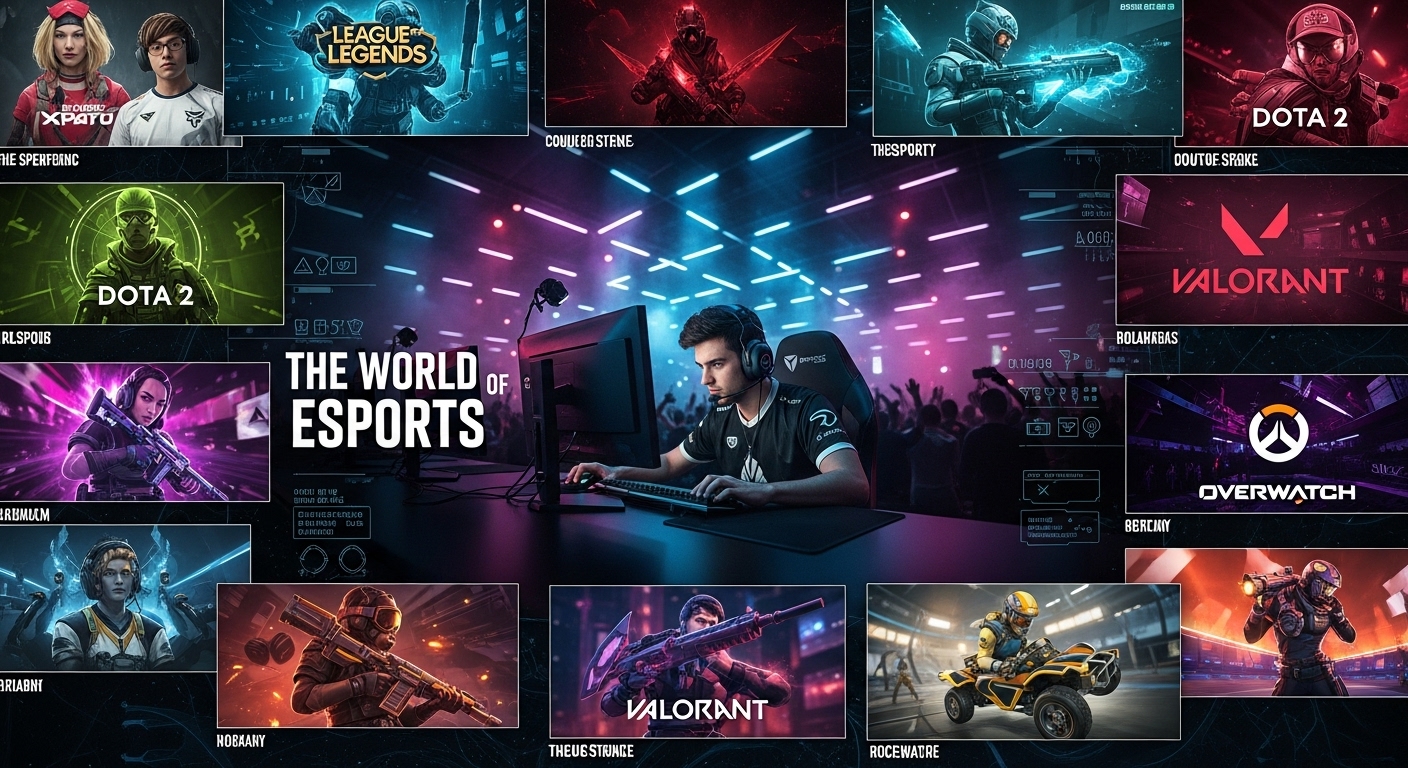
Esports, or electronic sports, has evolved from a niche pastime to a multi-billion-dollar industry with millions of players, fans, and followers around the globe. The world of competitive gaming has quickly become one of the most vibrant and exciting sectors of entertainment, attracting millions of viewers, huge sponsorships, and players who are treated like rock stars. Esports now spans across various genres, including first-person shooters (FPS), real-time strategy (RTS) games, multiplayer online battle arenas (MOBAs), and sports simulations.
This blog post explores the rapid rise of esports, the major components of the industry, the most popular games, the growing role of streaming platforms, and the future of competitive gaming. Whether you’re an avid gamer or just starting to explore the world of esports, this in-depth overview will give you a comprehensive understanding of what esports is, how it became so big, and what lies ahead for this global phenomenon.
What is Esports?
Esports, short for “electronic sports,” refers to organized, multiplayer video game competitions, particularly between professional players, teams, and organizations. Unlike casual gaming, which people do for recreation, esports is structured and competitive, often taking the form of tournaments, leagues, and events where top players compete for substantial prize money, recognition, and sponsorship deals.
The primary appeal of esports lies in its competitive nature, where players must rely on strategy, skill, teamwork, and reflexes to succeed. These competitions take place in various formats: online tournaments, offline events in large stadiums or arenas, and even virtual reality-based events. With a strong presence on platforms like Twitch, YouTube Gaming, and Facebook Gaming, esports is accessible to fans worldwide, with many games featuring live streams that showcase professional players in action.
The Origins of Esports
The origins of esports can be traced back to the early 1970s, when competitive video gaming first emerged. The first recorded video game competition took place in 1972 at Stanford University, where players competed in “Spacewar,” one of the earliest arcade games. Although primitive by today’s standards, this event laid the groundwork for the competitive gaming culture that would evolve over the next few decades.
In the late 1990s and early 2000s, the rise of the internet and faster broadband speeds allowed for online multiplayer gaming. Games like StarCraft, Quake, and Warcraft III began attracting competitive players and setting the stage for larger-scale tournaments. Around this time, South Korea became the epicenter of esports, where games like StarCraft gained a cult following, and the first professional esports leagues were established. Esports in South Korea reached the level of mainstream popularity, with television channels broadcasting gaming tournaments and creating stars out of players who would go on to command legions of fans.
Esports continued to evolve through the 2000s, with games like Counter-Strike, World of Warcraft, and League of Legends entering the competitive scene. As the technology behind online gaming improved and platforms like Twitch emerged, esports began to grow on a global scale. By the mid-2010s, esports had solidified its position as a global entertainment force, attracting significant investments and becoming a key part of the entertainment industry.
How Esports Became a Multi-Billion-Dollar Industry
The meteoric rise of esports into a multi-billion-dollar industry can be attributed to several factors, from technological advancements to the growing appeal of competitive gaming as both a spectator sport and a career choice. Let’s explore the major drivers behind the rapid expansion of esports.
1. The Growth of Online Streaming
A major factor in the rise of esports has been the emergence of streaming platforms, particularly Twitch, which launched in 2011. Twitch made it easier for anyone, anywhere in the world, to watch live gaming content, including esports tournaments. The rise of platforms like YouTube Gaming, Facebook Gaming, and other specialized channels has helped esports reach audiences globally.
These platforms allowed fans to watch professional gaming events, sometimes in real-time, and interact with players and commentators. The live-streaming model has not only made esports more accessible to viewers but also created new revenue streams for players, teams, and event organizers. Streamers and professional players can earn money through subscriptions, donations, and advertising, and tournaments generate revenue through sponsorships, media rights, and ticket sales.
2. Corporate Sponsorships and Brand Investments
As esports gained popularity, it attracted the attention of major corporations seeking to tap into the growing audience of gaming enthusiasts. Companies like Intel, Red Bull, Nike, Coca-Cola, and Mercedes-Benz have invested heavily in esports, either through sponsoring teams, events, or partnering with game developers. These sponsorships have helped fund large-scale tournaments and given esports legitimacy in the eyes of investors and the general public.
Sponsorships are not just limited to brands within the tech or gaming industries. Traditional brands and sports companies have also recognized the marketing potential of reaching the young, tech-savvy, and global esports audience. By sponsoring esports events or teams, these companies gain access to a loyal fanbase and an emerging market that is highly engaged with digital media.
3. The Globalization of Esports
Esports has quickly become a global phenomenon, transcending regional barriers. What started in countries like South Korea, the United States, and Europe has now expanded into the Middle East, China, Latin America, and other regions. The internet has connected players, teams, and fans from all corners of the world, and esports organizations are capitalizing on this by hosting international tournaments and creating localized leagues.
In countries like China, esports has become a mainstream form of entertainment, with major companies like Tencent investing in esports-related ventures and game development. Esports is particularly popular in regions with high internet penetration and strong gaming communities, allowing the industry to flourish globally.
4. Professional Leagues and Team Organizations
In addition to one-off tournaments, the esports industry has grown thanks to the development of professional leagues and organizations. Much like traditional sports, esports now has established leagues that operate year-round, offering a structured and regulated environment for players and teams.
One of the most notable examples is the League of Legends World Championship, which is an annual event hosted by Riot Games. This event has become one of the most-watched esports tournaments in the world, with millions of viewers tuning in for the grand finals. Other games, such as Overwatch (with the Overwatch League) and Call of Duty (with the Call of Duty League), have followed suit, establishing their own professional leagues.
Teams in esports often have coaches, analysts, and support staff, just like traditional sports teams. Players train rigorously, participating in practice sessions, strategy meetings, and even team-building exercises. Esports has evolved into a professional career for many, with players earning salaries, sponsorships, and prize money. Successful esports organizations, such as Team Liquid, Cloud9, and FaZe Clan, have established themselves as household names in the gaming world.
5. Prize Money and Career Opportunities
The financial rewards of esports have played a significant role in attracting players to pursue competitive gaming as a career. Major tournaments offer multi-million-dollar prize pools, with individual players and teams taking home substantial earnings based on their performance. The International, the premier tournament for Dota 2, has seen its prize pool exceed $40 million, with the winning team earning millions in cash.
These large prize pools have elevated esports into a serious professional field, where players can make lucrative earnings not just from tournaments, but also from sponsorship deals, merchandise sales, and content creation. Many esports athletes now enjoy fame and fortune comparable to traditional sports stars, with dedicated fanbases and endorsement deals.
Popular Esports Games
The world of esports is diverse, with multiple genres of games attracting dedicated competitive communities. Here are some of the most popular games that have defined the esports landscape:
League of Legends (LoL)
One of the most influential games in esports history, League of Legends (LoL) has a massive global following. Released in 2009 by Riot Games, LoL is a multiplayer online battle arena (MOBA) game where two teams of five players compete to destroy the enemy’s Nexus while defending their own. The game has an extensive professional ecosystem with regional leagues (e.g., LCS in North America, LEC in Europe) and the League of Legends World Championship—an event that attracts millions of viewers each year.
Counter-Strike: Global Offensive (CS: GO)
CS: GO, released by Valve in 2012, is one of the most enduring competitive first-person shooters in esports. With teams of terrorists and counter-terrorists, the game focuses on strategy, reflexes, and team coordination. Major tournaments like ESL Pro League and DreamHack feature top-tier teams such as Astralis, Natus Vincere, and FaZe Clan, who compete for significant prize money.
Dota 2
Dota 2, another game from Valve, is one of the most complex and high-stakes esports titles in the world. The game, like LoL, is a MOBA where two teams of five players battle to destroy each other’s base. Dota 2’s main event, The International, is legendary for its massive prize pool and high-level competition. The game has an extremely dedicated community of fans and players, making it one of the most competitive titles in the esports world.
Overwatch
Overwatch, developed by Blizzard Entertainment, is a team-based first-person shooter that has also gained a significant esports presence. The Overwatch League (OWL), which started in 2018, features teams from cities around the world competing in a structured format. Overwatch’s colorful graphics, diverse characters, and emphasis on teamwork have made it a fan favorite in esports.
Fortnite
Though originally launched as a battle royale game for casual players, Fortnite has become a major player in esports. The game’s massive player base and accessibility have made it a key component of competitive gaming. The Fortnite World Cup in 2019 featured a $30 million prize pool, attracting players from across the globe. The game’s integration of live events and cross-platform play has set new standards for the esports industry.
The Future of Esports
The future of esports is filled with exciting possibilities. As the industry continues to grow, several trends are likely to shape its direction:
1. Mainstream Acceptance
Esports is no longer seen as a niche hobby. With the growing number of esports events broadcast on television and mainstream media coverage, esports is becoming more widely accepted as a legitimate form of entertainment. In the future, it is likely that esports will be included in major sports festivals and even the Olympics.
2. Virtual and Augmented Reality
The integration of virtual reality (VR) and augmented reality (AR) in esports could change how both players and fans experience competitive gaming. VR could allow for immersive spectator experiences, where viewers feel like they are part of the action, while AR could bring new elements to gameplay, adding layers of interactivity to traditional esports formats.
3. Expanding Fanbases
As esports becomes more global, the industry will continue to appeal to a broader audience. The rise of mobile gaming, for example, opens the door for millions of new players and fans who may not have access to high-end gaming PCs or consoles. Games like PUBG Mobile and Arena of Valor are already making waves in competitive gaming, and the expansion of esports into mobile devices will only continue to grow the fanbase.
4. Diversity and Inclusion
Esports has traditionally been dominated by male players, but in recent years, there has been a push for greater gender diversity and inclusivity within the industry. Female esports players and teams are gaining recognition, and there is an increasing focus on creating a welcoming environment for players of all backgrounds and identities.
Conclusion
Esports has come a long way from its humble beginnings in the 1970s to become one of the most exciting and rapidly growing industries in the world. From the rise of streaming platforms to massive corporate sponsorships and the development of professional leagues, esports has firmly established itself as a mainstream entertainment phenomenon.
As technology continues to evolve, esports will likely become even more immersive, global, and inclusive. With millions of players and fans worldwide, competitive gaming is here to stay, and its future looks incredibly bright. Whether you’re a player, a fan, or someone new to esports, there’s no denying the incredible impact this industry has had—and will continue to have—on the world of entertainment.