

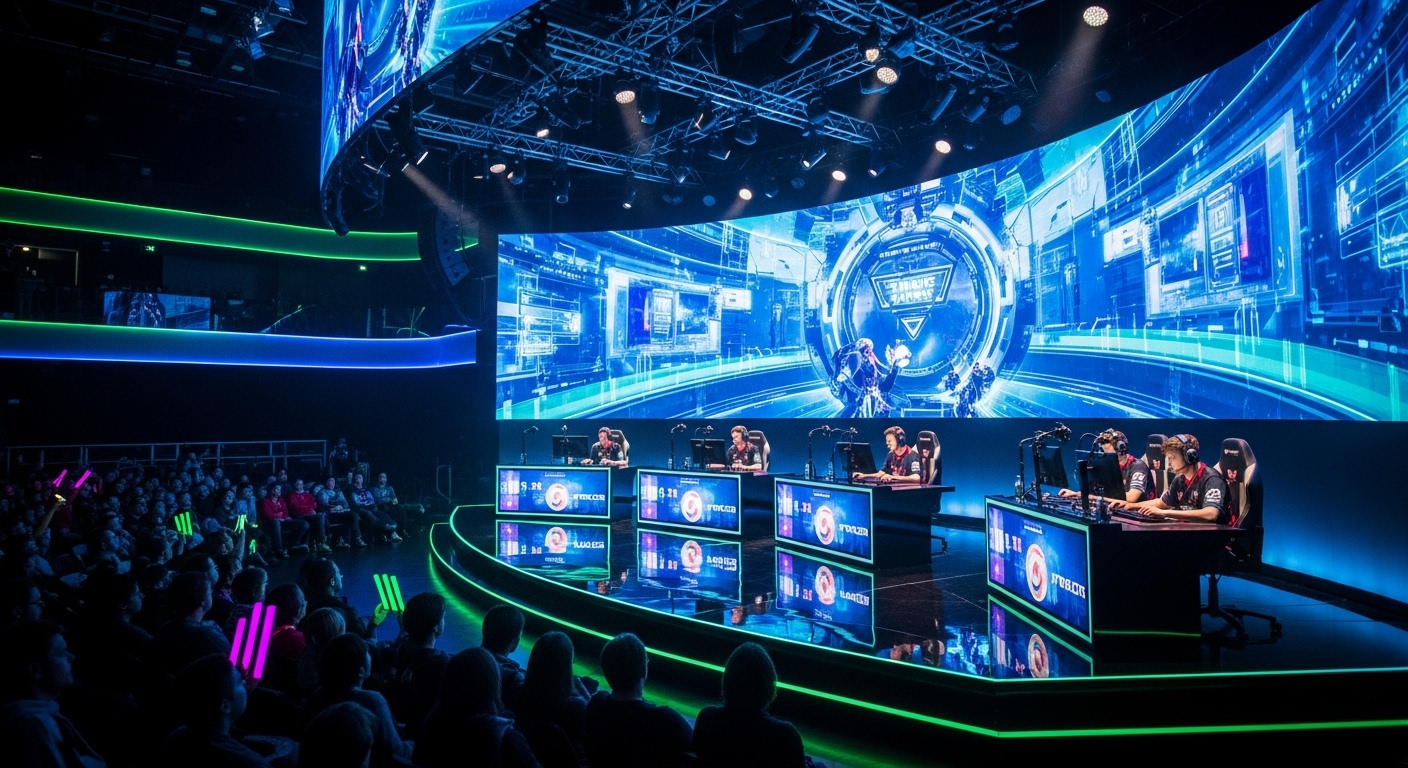
Esports, once a niche activity enjoyed by a small group of gamers, has quickly transformed into a multi-billion-dollar global industry. What started as friendly competitions among gamers in local arcades or living rooms has now evolved into a highly organized and professional world of competitive gaming. Esports tournaments attract millions of viewers worldwide, offering massive prize pools, lucrative sponsorships, and the potential for players to achieve fame and fortune. In this blog, we will explore the history of esports, its meteoric rise, the factors contributing to its growth, and its future as a dominant form of entertainment.
The Early Days of Esports: Humble Beginnings
The roots of esports can be traced back to the 1970s and 1980s when competitive gaming began to emerge in arcades and early computer networks. The first real instance of organized gaming competition occurred in 1972, with the Intergalactic Spacewar Olympics, a competition held at Stanford University to determine the best Spacewar player. While small and obscure by today’s standards, this event set the stage for future gaming competitions.
However, it wasn’t until the 1990s, with the rise of personal computers and online gaming, that esports began to take its modern form. Games like Street Fighter and Quake were popular choices for competitive gaming, especially in local-area network (LAN) tournaments. The early 1990s saw the emergence of the first major esports organizations, such as the Cyberathlete Professional League (CPL), founded in 1997, which helped formalize competitive gaming and attract sponsorships from major tech companies.
During this time, a key breakthrough occurred with the release of StarCraft in 1998. The game’s deep strategy, multiplayer mode, and widespread popularity made it a perfect candidate for esports. In South Korea, StarCraft tournaments became a cultural phenomenon, with televised events and massive crowds attending to watch top-tier players compete. South Korea remains a key hub for esports culture to this day, and the success of StarCraft demonstrated the potential of esports to attract both players and fans in large numbers.
The Rise of Professional Esports: A Global Industry
The early 2000s marked a pivotal moment in the development of esports as a professional and commercial industry. One of the most significant events was the launch of Major League Gaming (MLG) in 2002. MLG organized national and international tournaments for games like Halo, Call of Duty, and StarCraft. These events helped solidify esports as a professional activity and began to attract sponsorships from major brands, paving the way for esports’ commercialization.
In 2005, World Cyber Games (WCG) further expanded esports on the global stage by hosting the first international competitive gaming event in Singapore. The WCG brought together players from all around the world to compete for the title of world champion in popular games like Warcraft III and Counter-Strike. This international exposure helped esports gain credibility and recognition as a legitimate form of entertainment.
Another milestone in the growth of esports came in 2009 with the launch of League of Legends (LoL), a multiplayer online battle arena (MOBA) game by Riot Games. LoL became a key title in the esports world, with its highly competitive nature and a large player base driving the creation of professional leagues around the world. Riot Games introduced the League of Legends Championship Series (LCS), which became one of the most-watched esports leagues globally. The success of LoL marked a turning point in esports, as it demonstrated that gaming could offer not only entertainment but also a serious career path for skilled players.
As the 2010s progressed, other major games like Dota 2, Overwatch, and Counter-Strike: Global Offensive (CS: GO) joined the roster of titles with professional esports leagues. By this point, esports had expanded beyond just tournaments into fully-fledged ecosystems, complete with team organizations, sponsorship deals, streaming platforms, and a dedicated fanbase. Games became more polished, offering ever-better graphics, enhanced mechanics, and deep in-game strategies, making them more appealing to players and viewers alike.
The Esports Ecosystem: Teams, Leagues, and Tournaments
At the heart of the esports industry is a complex ecosystem composed of professional teams, individual players, leagues, tournaments, and sponsors. Each of these components plays a crucial role in shaping the esports experience for both players and fans.
Professional Esports Teams and Players
Professional esports players are the stars of the show, much like athletes in traditional sports. They dedicate countless hours to practice, refine their skills, and develop strategies for their respective games. Many players start out as amateurs or streamers, gaining recognition through platforms like Twitch, YouTube, or by participating in online tournaments. Successful players often sign with professional esports organizations that provide them with resources such as coaching, training facilities, and a salary to support their careers.
Esports teams, such as Cloud9, Team Liquid, Fnatic, and SK Telecom T1, compete in a variety of games and leagues, with some teams even fielding players across multiple titles. These organizations manage team rosters, arrange sponsorship deals, and help promote their players and teams through various media channels. Sponsorships from major companies like Intel, Coca-Cola, and Red Bull are a key part of the esports revenue model. In return for their financial support, sponsors get the opportunity to advertise to a highly engaged audience that spends significant time watching and interacting with esports content.
Leagues and Tournaments
Esports leagues and tournaments are where the action happens. Unlike traditional sports, where teams compete in regional leagues or one-off tournaments, esports often has year-round leagues with regular season matches culminating in a championship or playoff event. Some of the most prominent esports leagues include the League of Legends Championship Series (LCS), Overwatch League (OWL), and Call of Duty League (CDL).
Tournaments like The International (TI) for Dota 2, League of Legends World Championship, and CS: GO Major Championships are the crown jewels of the esports calendar. These events attract millions of viewers, both online and in-person, with prize pools sometimes reaching tens of millions of dollars. For example, TI’s prize pool consistently breaks records, with its crowdfunded prize pool surpassing $40 million in recent years.
Streaming Platforms and Audience Engagement
The growth of esports would not have been possible without the rise of streaming platforms like Twitch, YouTube Gaming, and Facebook Gaming. These platforms allow players to broadcast their gameplay to a global audience in real-time, offering a unique level of interaction between streamers and viewers. Fans can chat with their favorite players, watch live tournaments, and engage with a global community of esports enthusiasts.
Twitch, in particular, has become the go-to platform for esports content. With millions of active streamers and viewers, Twitch provides a space for both professional players and casual gamers to showcase their skills. Esports tournaments are streamed live, and channels often host pre- and post-game analysis, making it a central hub for esports fans. The ability for fans to watch their favorite teams and players compete from anywhere in the world has helped propel the industry to new heights.
The Business of Esports: Sponsorship, Media, and Advertising
As esports has grown, so too has the business side of the industry. Sponsorships, media rights deals, and advertising revenue are essential to the financial success of esports organizations, tournaments, and teams. Esports sponsorships have become a cornerstone of the industry, with major brands recognizing the opportunity to reach a younger, tech-savvy demographic.
Sponsorship deals with companies like Intel, Coca-Cola, Red Bull, and Mercedes-Benz provide esports teams and tournaments with the financial backing needed to sustain operations. Brands are also increasingly involved in esports through partnerships with streaming platforms, where they advertise their products during live streams, pre-roll ads, and event sponsorships. With global reach and highly engaged fans, esports offers a valuable advertising space for companies looking to connect with the next generation of consumers.
In addition to sponsorships, media rights deals have also become an important revenue stream. Companies such as ESPN, Turner Sports, and even cable networks have begun broadcasting esports events on TV, further legitimizing esports as a mainstream form of entertainment. These deals have brought esports into homes across the world, expanding its viewership beyond digital platforms.
The Future of Esports: Opportunities and Challenges
The future of esports looks incredibly promising, with several key trends shaping the industry’s growth trajectory.
Increasing Integration with Traditional Sports
As esports continues to gain recognition, it is likely that we will see even more integration with traditional sports. In fact, many traditional sports leagues, such as the NBA, NFL, and major European football clubs, have already invested in esports. Several NBA teams, for example, have their own esports teams that compete in NBA 2K competitions. Traditional sports venues are also beginning to host esports events, further bridging the gap between the two worlds.
This collaboration could lead to the formation of hybrid leagues, where professional athletes from both the physical and digital worlds compete in combined formats, creating new types of entertainment that appeal to both esports and sports fans alike.
The Rise of Virtual Reality and Augmented Reality
The integration of virtual reality (VR) and augmented reality (AR) into esports could change the way players and viewers experience competitive gaming. VR and AR have the potential to create even more immersive gaming environments, allowing players to engage with their games in ways that were previously impossible. These technologies could allow players to compete in fully realized virtual worlds, adding new layers of strategy and excitement to the gameplay.