

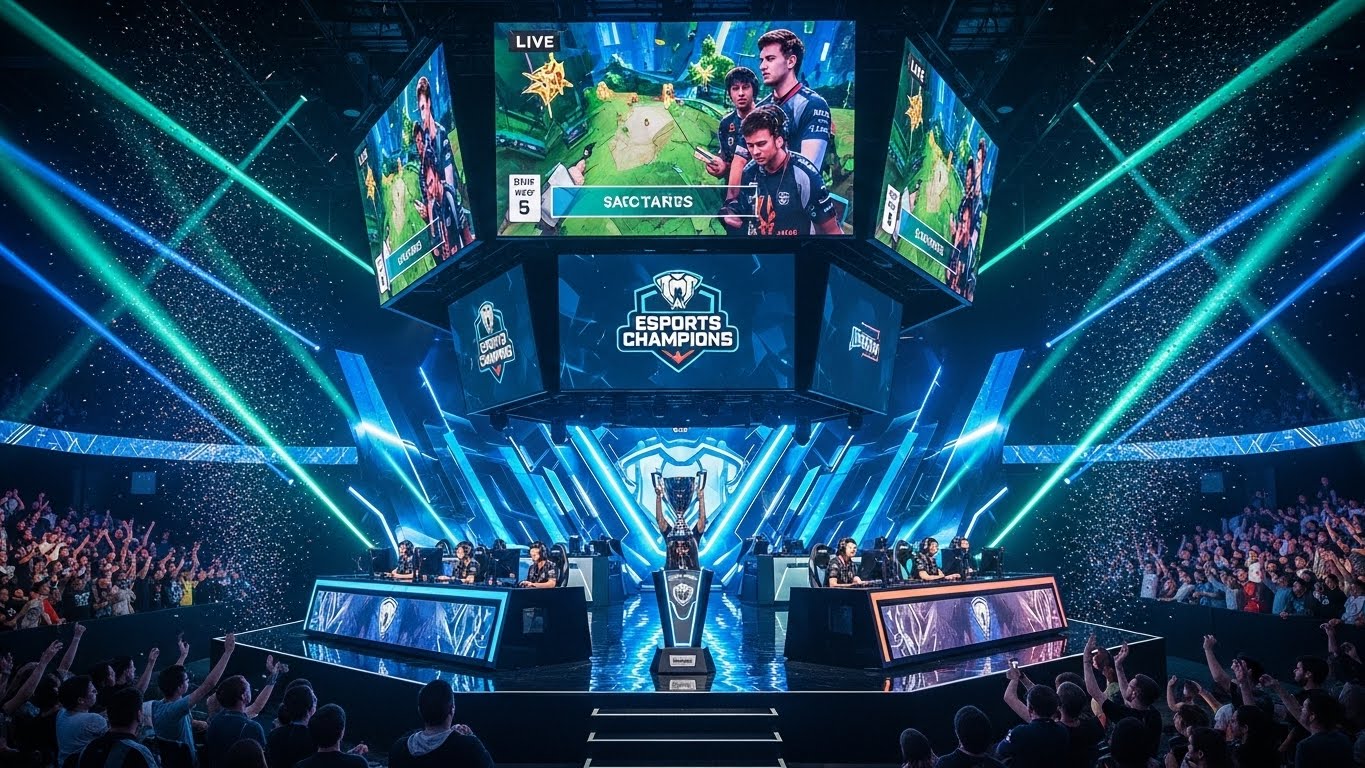
Introduction: A Digital Revolution in Competitive Sports
Esports has grown exponentially in recent years, evolving from a niche hobby into a global phenomenon. Competitive gaming, once viewed as something done in basements or local arcades, is now a major industry with millions of fans, millions of dollars in sponsorships, and a growing number of professional players. From online tournaments to large-scale events in stadiums, esports has created a massive and dedicated fan base that rivals traditional sports in terms of viewership and engagement. This blog explores how esports evolved, what it has become today, and the role it plays in the entertainment landscape.
The Beginnings: From Casual Play to Competitive Gaming
The roots of esports can be traced back to the early days of video gaming. In the late 1970s and 1980s, arcade games such as Space Invaders and Pac-Man captivated players and introduced the concept of high-score challenges. These early competitions were simple but sparked a competitive spirit that laid the foundation for future events. The true evolution of esports, however, came with the advent of personal computers and online gaming in the 1990s. Games like StarCraft, Quake, and Warcraft provided platforms for competitive play on a global scale. Local tournaments gave rise to the idea of professional gaming, where players would compete not just for bragging rights, but for real money, fame, and recognition. These early tournaments were the first steps toward what would eventually become the billion-dollar esports industry.
The Rise of Online Multiplayer Games
The success of StarCraft and Warcraft was pivotal for the growth of esports, especially as the internet began to connect players from different parts of the world. Titles like Counter-Strike, Dota, and League of Legends marked the era when online multiplayer gaming became a cornerstone of esports culture. These games allowed players to connect over the internet, compete against each other, and form communities dedicated to mastering the games. Competitive online gaming soon evolved into organized leagues, where players and teams would compete for prestige, sponsorships, and huge prize pools. The World Cyber Games (WCG) and the Electronic Sports World Cup (ESWC) were among the first global tournaments, providing platforms for players to showcase their skills on an international stage.
Esports Becomes a Global Industry
By the mid-2000s, esports began to break into the mainstream. Games like League of Legends, Dota 2, Counter-Strike: Global Offensive (CS:GO), and Overwatch became more than just games—they became multi-million dollar industries. Tournaments such as The International, the League of Legends World Championship, and EVO drew massive crowds both in person and online, attracting millions of viewers across streaming platforms such as Twitch and YouTube. With the rise of social media, fans could interact with players, watch live streams, and participate in the growing esports culture. Esports organizations started to form teams, hire coaches, and sign sponsorship deals with major global brands. What was once an underground phenomenon had now blossomed into a thriving global industry.
The Professional Esports Athlete
Esports athletes are now viewed in the same light as traditional sports professionals. These players dedicate their lives to mastering their chosen games, often practicing for 8-10 hours a day. Much like athletes in other sports, esports professionals follow strict routines that include individual training, team scrims (practice matches), and analysis of game mechanics and strategies. Esports athletes also focus on physical fitness and mental health to maintain peak performance, as long gaming sessions can lead to burnout if not properly managed. The professionalization of esports has created an entire support system around players. Managers, analysts, coaches, nutritionists, and psychologists are now part of esports organizations, ensuring that players are well-prepared for both the physical and mental demands of competition.
The Role of Esports Organizations
Esports organizations are crucial to the development and success of professional gaming. These organizations operate much like traditional sports franchises. They recruit top talent, build team rosters, secure sponsorships, and organize events. Well-known teams like Cloud9, Fnatic, Team Liquid, and T1 have become household names in the esports world. These organizations not only provide players with the resources and environment to succeed but also act as brand ambassadors, helping grow the esports community and foster fan loyalty. The business model of esports organizations revolves around securing sponsorships from major brands, organizing merchandise sales, and creating content that resonates with fans. Their role in the esports ecosystem is multifaceted, supporting both players and the broader community.
The Evolution of Esports Broadcasts and Streaming
One of the key factors in the growth of esports has been the rise of online streaming platforms. Websites like Twitch, YouTube Gaming, and Facebook Gaming have revolutionized the way fans consume esports content. These platforms allow viewers to watch live gameplay, interact with their favorite players, and even compete in some cases. The ability to live-stream games and tournaments has created an immersive spectator experience, which is at the heart of esports’ popularity. Major tournaments like The International and the League of Legends World Championship attract millions of viewers worldwide, with large-scale productions that rival traditional sports broadcasts in terms of quality and engagement. With commentators, analysts, and live reactions from fans, esports broadcasts have transformed from basic streams into full-fledged events with a production value that rivals traditional sports.
The Economic Impact of Esports
The economic impact of esports cannot be overstated. Esports has become a multi-billion-dollar industry, with sponsorships, merchandise sales, ticket sales, and advertising revenues contributing to its financial success. Major brands from a variety of industries—including technology, energy drinks, apparel, and even automobiles—have invested heavily in esports sponsorships. Global companies like Intel, Red Bull, and Coca-Cola have become synonymous with esports, helping to fund tournaments and support players and teams. Prize pools for tournaments like The International have reached staggering heights, with the 2019 edition of the tournament offering over $34 million in prizes. Esports is also creating job opportunities beyond the players themselves, including roles in event management, content creation, marketing, and production. As the industry continues to grow, the economic impact of esports is expected to increase, with new markets emerging in regions like Latin America, Southeast Asia, and Africa.
Esports and Cultural Influence
Esports is not just an entertainment medium; it is a cultural phenomenon. It has influenced various aspects of modern culture, from fashion to music. Esports athletes are now celebrities in their own right, with large followings on social media and collaborations with mainstream brands. The cultural crossover between gaming and pop culture has led to a new wave of gaming-related content, including esports documentaries, music videos, and even fashion lines. Furthermore, esports has become an inclusive space where fans of all backgrounds can come together, share a common passion, and celebrate competitive gaming. Online communities, fan clubs, and streaming platforms have made it easier for fans to engage with players, learn new strategies, and participate in discussions. Esports has proven that gaming is no longer an isolated activity but a shared experience that transcends borders and brings people together.
Challenges and Controversies
Despite its growth, esports still faces significant challenges. One of the most prominent issues is player burnout. The intense training schedules and the pressure to perform can take a toll on players’ mental and physical health. This has led to calls for better support systems for professional players, including mental health resources and a balanced lifestyle. Additionally, esports faces the challenge of maintaining fair play. Cheating, match-fixing, and performance-enhancing drug use have been a problem in competitive gaming, much like in traditional sports. The industry must continue to find solutions to these issues, implementing stricter regulations and anti-cheating measures to preserve the integrity of the sport.
The Future of Esports
The future of esports looks incredibly promising. With the continued growth of mobile gaming, esports is expanding beyond the traditional PC and console platforms. Games like PUBG Mobile, Mobile Legends, and Free Fire are attracting millions of players and viewers, especially in regions like Southeast Asia. The integration of virtual reality (VR) and augmented reality (AR) could also open up new frontiers in esports, providing players and fans with immersive experiences. As esports continues to gain recognition, it may even be included in major events like the Olympic Games, further solidifying its place in the global sports arena.
Conclusion: Esports—A New Era in Competitive Entertainment
Esports has come a long way from its humble beginnings, evolving into a global industry that impacts millions of players and fans. What started as casual competitions among friends has now become a professional and cultural force, with dedicated players, teams, and fans. The economic, cultural, and social impact of esports will continue to grow, and its influence on traditional sports and entertainment will be felt for years to come. As technology advances and the industry expands, esports will remain at the forefront of competitive gaming, offering new opportunities for players, fans, and brands. The rise of esports signifies a new era in entertainment—a digital age where gaming is not just a pastime but a powerful global phenomenon.