

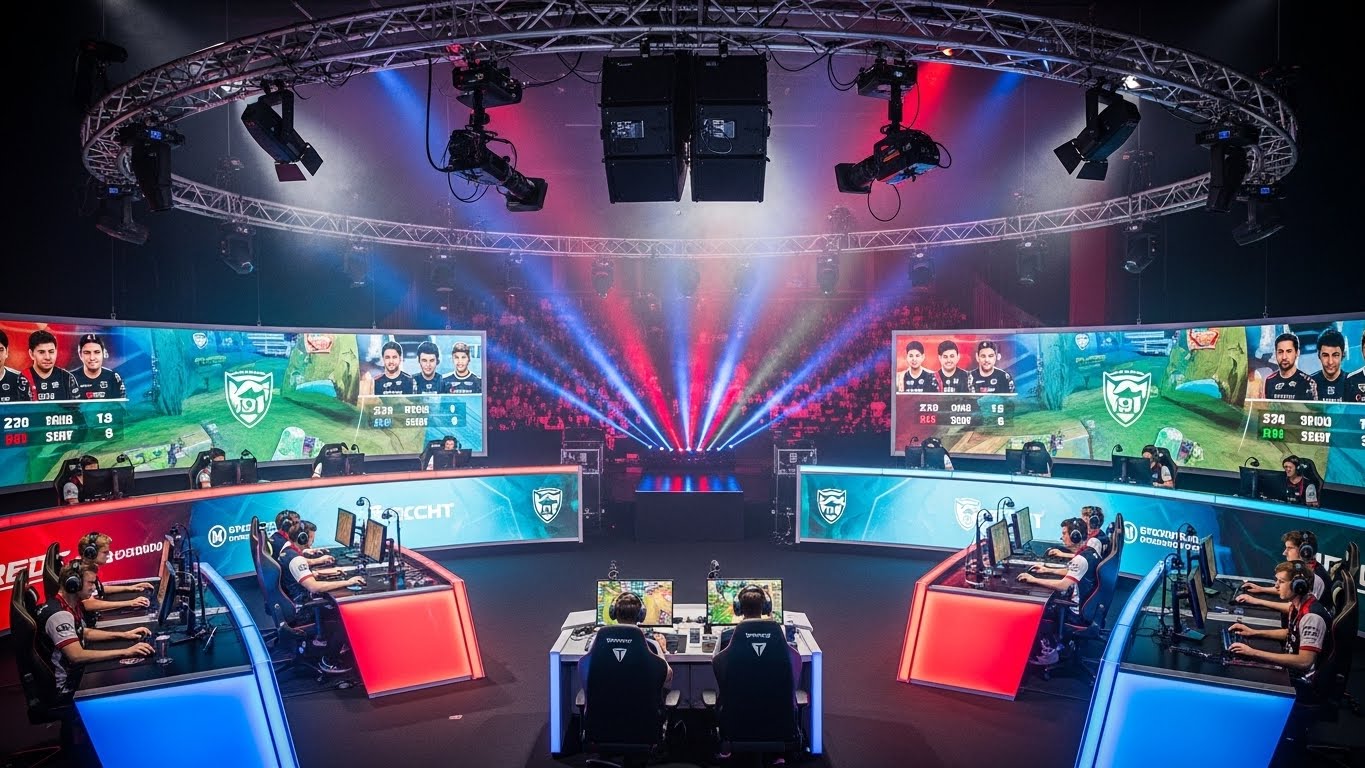
Introduction: The Rise of a Digital Phenomenon
Esports has emerged as one of the most influential and rapidly growing industries in modern entertainment. What began as casual gaming among friends has evolved into a highly organized, professional field that captivates millions worldwide. Competitive gaming now rivals traditional sports in both audience engagement and financial investment. With professional teams, international tournaments, sponsorships, and dedicated fan communities, esports has transformed into a cultural and economic powerhouse. This blog explores the evolution of esports, its impact on society, the business behind it, the challenges it faces, and the potential future of this revolutionary industry.
The Humble Beginnings: From Arcades to Online Arenas
Esports traces its origins to the 1970s and 1980s when arcade competitions and high-score challenges created a foundation for organized gaming. Early titles like Space Invaders and Pac-Man attracted enthusiasts who competed for prestige and local recognition. With the advent of personal computers and home consoles in the 1990s, multiplayer gaming started to flourish. Games such as Doom, Quake, and StarCraft offered competitive gameplay that could be experienced beyond physical locations through local networks.
The true turning point came with the rise of the internet, allowing players to compete globally. Tournaments transitioned from basement competitions to international events streamed online. This global reach was a catalyst for the professionalization of esports, attracting players, sponsors, and fans from around the world.
Games That Shaped the Esports Landscape
Certain games have played pivotal roles in the growth of competitive gaming. First-person shooters, like Counter-Strike and Overwatch, demanded precision, strategy, and teamwork. Multiplayer online battle arena games, including League of Legends and Dota 2, introduced complex strategies and long-term competitive ecosystems. Battle royale games, such as Fortnite and Apex Legends, captured younger audiences with dynamic, fast-paced gameplay.
Each of these genres brought unique elements to esports. MOBAs emphasized teamwork and long-term strategy, FPS games highlighted reflexes and tactical thinking, and battle royale titles introduced unpredictability and individual skill. Together, these games created diverse opportunities for players and a wide range of viewing experiences for audiences.
Spectatorship: The Allure of Watching Gaming
The rise of esports has brought millions of viewers who tune in to watch professional players compete. Many wonder why audiences enjoy watching others play games, but the reasons mirror the appeal of traditional sports. Spectators are drawn to skill, strategy, and excitement. Watching a team coordinate perfectly or a player execute a complex maneuver creates the same thrill as a well-played football match.
Accessibility has also contributed to the surge in viewership. Streaming platforms allow fans to watch tournaments in real time from anywhere in the world. Beyond gameplay, audiences connect with players on a personal level. Many professional gamers stream their lives, offering insights into practice routines, personal experiences, and behind-the-scenes interactions. This human connection builds loyalty and community engagement that traditional sports often struggle to achieve.
Professional Players and the Esports Career Path
Esports athletes are highly skilled individuals who train rigorously, often practicing ten or more hours daily. Their preparation includes strategy sessions, team coordination exercises, physical fitness routines, and extensive gameplay analysis. The mental and physical demands are significant, comparable to traditional athletes, and require discipline, resilience, and dedication.
Teams are structured like traditional sports organizations, with coaches, managers, analysts, and support staff. Top-tier esports organizations maintain training facilities equipped with the latest technology to optimize performance. Professional players compete for substantial prize money, sponsorship deals, and fame, yet their careers can be relatively short, and the pressure to maintain peak performance is constant.
Despite the challenges, esports has become a viable career option. Scholarships, university programs, and dedicated training facilities provide pathways for aspiring players to reach professional levels while gaining education and life skills.
The Economics of Esports
Esports is a multi-billion-dollar industry fueled by various revenue streams. Sponsorships from global brands, advertising during tournaments, merchandise sales, media rights, and prize pools all contribute to its growth. Major technology companies, consumer brands, and even non-endemic industries recognize the value of esports as a marketing platform to reach younger, tech-savvy audiences.
Live events also generate significant economic impact. Esports arenas attract thousands of fans for competitions, and tournaments often fill large stadiums. Cities worldwide are investing in dedicated esports venues to accommodate the growing demand. Additionally, esports has created numerous job opportunities beyond gameplay, including event management, broadcasting, content creation, coaching, and analytics.
Technology: The Driving Force Behind Esports
Technology underpins every aspect of esports. High-speed internet, advanced gaming hardware, and streaming platforms enable global connectivity and seamless competition. Modern game engines create immersive experiences that engage both players and viewers.
Emerging technologies, such as virtual reality and augmented reality, promise to revolutionize esports further. These innovations could merge physical activity with digital gameplay, introducing new genres and experiences. Artificial intelligence is also playing a growing role by analyzing gameplay, providing performance insights, and developing strategic frameworks for teams.
Cultural Impact: Building Community and Identity
Esports has cultivated vibrant communities that transcend geographic and cultural boundaries. Fans engage through streaming platforms, social media, and local meetups, creating shared experiences that foster belonging. Esports has influenced fashion, music, and media, with branded merchandise, game-inspired apparel, and music collaborations gaining popularity. Documentaries and content series highlight the stories of players, teams, and tournaments, further embedding esports into mainstream culture.
The influence of esports extends to education as well. Many universities now offer esports programs, competitive teams, and scholarships, treating esports as a legitimate discipline. These initiatives prepare students for careers within the esports ecosystem and validate gaming as a serious pursuit.
Challenges Facing the Esports Industry
Despite its success, esports faces several challenges. Player burnout and mental health concerns remain significant issues due to long practice hours, high pressure, and short competitive careers. Maintaining fair play and integrity is crucial, as cheating, exploitation of game mechanics, and unequal regulations threaten the credibility of competitions.
Diversity and inclusion are also pressing challenges. While gaming is accessible to many, representation in professional esports remains uneven. Promoting inclusivity is essential to ensure the industry thrives and continues to attract a broad range of talent.
The Future of Esports
The future of esports is promising, with opportunities for continued growth, innovation, and mainstream integration. Global leagues, international championships, and large-scale tournaments will continue to expand audiences. Training programs, professional coaching, and infrastructure development will enhance player performance and career longevity.
Technological advancements, including virtual reality, augmented reality, and AI-driven analytics, will introduce new formats and experiences. Esports may become integrated into educational systems, workplace culture, and mainstream media, further solidifying its place as a central element of modern entertainment.
Conclusion: More Than Just a Game
Esports is not merely a form of entertainment; it is a cultural, social, and economic revolution. It challenges traditional notions of sports, fosters global communities, and offers new career pathways. The industry exemplifies how passion, technology, and competition can merge to create something extraordinary. As esports continues to evolve, its impact will expand, influencing entertainment, technology, culture, and society in unprecedented ways. The digital arenas of today are more than screens—they are the stages of tomorrow’s champions.