

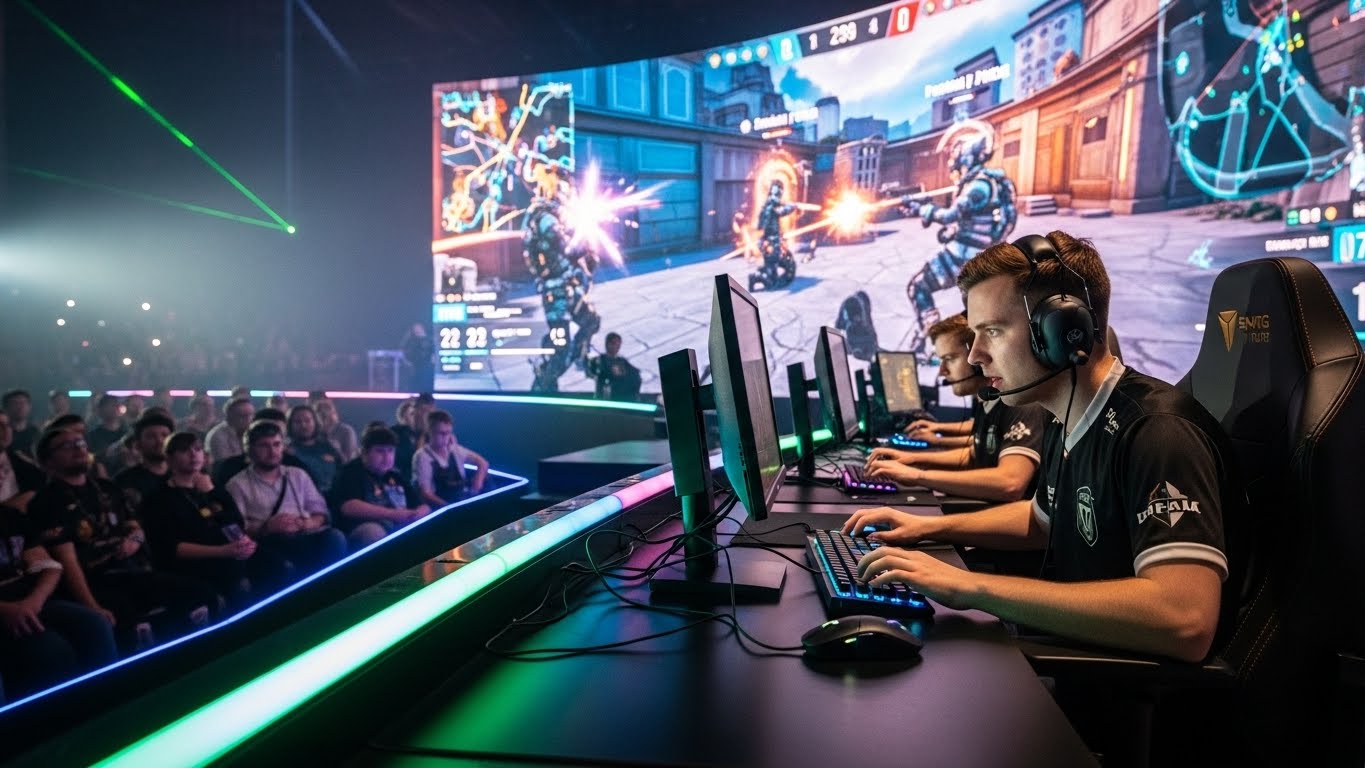
Introduction: The Rise of a New Competitive Era
Esports, or electronic sports, has transformed the concept of competition in the modern digital age. What was once considered casual gaming has now become a global phenomenon with professional leagues, massive audiences, and lucrative prize pools. From multiplayer online battle arenas to first-person shooters, esports encompasses a variety of game genres that challenge players’ skill, strategy, and teamwork. Unlike traditional sports, esports exists entirely in a virtual environment, yet it shares the same intensity, dedication, and fan engagement as conventional athletic competitions. The rise of esports reflects the evolution of technology, entertainment, and human interaction, demonstrating how digital innovation can redefine what it means to compete.
The Evolution of Esports
Esports has grown rapidly over the past few decades. In the 1970s and 1980s, gaming competitions were mostly local or arcade-based, with small communities of players competing for recognition. The late 1990s brought the rise of multiplayer online games such as StarCraft, Counter-Strike, and Warcraft, which allowed competitive gaming to reach a broader audience. With the development of online streaming platforms in the 2000s, esports gained a global audience, enabling fans to watch live competitions from anywhere in the world. Today, tournaments like the League of Legends World Championship, Dota 2’s The International, and the Fortnite World Cup attract millions of viewers, offer multimillion-dollar prize pools, and are broadcast worldwide. The evolution of esports highlights the growing legitimacy of digital competition as a professional and cultural phenomenon.
The Popularity of Esports
The popularity of esports stems from accessibility, diversity, and the sense of community it fosters. Unlike traditional sports, esports can be played by anyone with a computer or gaming console, making it inclusive and accessible. The wide range of game genres—from strategy games to sports simulations—caters to different interests and skill sets. Esports communities on social media, forums, and streaming platforms amplify engagement by allowing fans to follow their favorite players, share tips, and discuss strategies. This combination of accessibility and social interaction has created a global fanbase that rivals that of traditional sports, demonstrating how esports has evolved into a mainstream form of entertainment and cultural expression.
Physical and Mental Demands of Esports
Despite being a digital activity, esports requires significant physical and mental endurance. Professional players train for hours daily to refine their reflexes, strategic thinking, and coordination. Hand-eye coordination, rapid decision-making, and multitasking are essential skills that can determine the outcome of competitive matches. Mental resilience is equally important, as players face high-pressure situations, intense scrutiny, and the need to adapt to constantly changing game environments. Nutrition, exercise, and adequate rest have become critical components of an esports athlete’s routine, as maintaining physical health directly influences mental sharpness and reaction time. These demands demonstrate that esports is not just entertainment but a serious discipline requiring commitment, preparation, and precision.
Teamwork and Strategy in Esports
Many esports games are team-based, emphasizing the importance of coordination, communication, and collective strategy. Games like League of Legends, Overwatch, and Dota 2 require players to synchronize actions, make tactical decisions, and rely on each other’s strengths. Even individual-focused games often involve collaboration with coaches, analysts, and support staff to optimize performance. Teamwork in esports mirrors the dynamics of traditional sports, teaching players leadership, conflict resolution, and collaboration. These experiences develop skills that extend beyond gaming, including decision-making under pressure, strategic planning, and interpersonal communication. Esports illustrates how digital competition can foster meaningful life skills while providing high-stakes entertainment.
The Economics of Esports
Esports has evolved into a multi-billion-dollar industry with a vast ecosystem of players, organizations, sponsors, and media. Revenue streams include tournament prizes, advertising, sponsorship deals, merchandise, and streaming platforms. Professional esports players can earn substantial income through salaries, winnings, and endorsements, while content creators build personal brands through streaming and video platforms. Esports organizations operate like traditional sports franchises, hiring managers, coaches, analysts, and marketing teams to optimize team performance and audience engagement. Additionally, tournaments boost local economies by attracting spectators, creating jobs, and generating tourism. The economic impact of esports emphasizes its status as a legitimate, professional industry with long-term growth potential.
Esports as a Career Path
Esports offers a variety of career opportunities beyond playing professionally. Players, coaches, analysts, commentators, and content creators form the backbone of the industry. Professional players often start at grassroots competitions or online platforms before joining major leagues or teams. Coaches and analysts use data-driven approaches to optimize performance and strategy. Commentators provide live analysis that enhances the viewing experience, while content creators engage fans through tutorials, streams, and community interaction. Careers in esports require dedication, adaptability, and continuous skill development, reflecting the dynamic and evolving nature of the industry. As esports continues to gain mainstream recognition, these career paths are becoming increasingly viable and respected.
Esports and Education
Educational institutions are beginning to recognize esports as a legitimate avenue for skill development and career preparation. Schools and universities have established esports programs, teams, and scholarships, providing students with opportunities to compete, learn, and pursue degrees related to game design, digital media, and esports management. Participation in esports cultivates valuable skills such as strategic thinking, teamwork, communication, and time management. By integrating esports into educational settings, institutions empower students to explore professional opportunities while developing transferable skills applicable to multiple career paths. This formal recognition reflects the growing societal acceptance and legitimacy of esports.
Cultural Significance of Esports
Esports is not just a competition; it is a cultural movement. Major tournaments are celebrated events, drawing attention from mainstream media, celebrities, and global audiences. Fans engage through social media, forums, cosplay, fan art, and merchandise, creating vibrant communities that celebrate both gaming and creativity. Esports promotes inclusivity and diversity by providing opportunities for underrepresented groups to compete and lead. Cultural engagement extends beyond gaming, influencing fashion, entertainment, and digital content creation. The cultural significance of esports lies in its ability to foster connection, inspire creativity, and create shared experiences that transcend geographical boundaries.
Technology Driving Esports
The growth of esports is fueled by technological advancements. High-speed internet, powerful gaming hardware, and sophisticated software enable seamless online competition and real-time streaming. Emerging technologies such as virtual reality, augmented reality, and artificial intelligence are reshaping training, gameplay, and spectator experiences. Data analytics helps teams evaluate performance, optimize strategies, and track progress. Technology not only enhances the competitive experience but also broadens access, allowing players and audiences worldwide to participate. The integration of technology in esports exemplifies how innovation can transform traditional concepts of sport, entertainment, and community engagement.
Challenges Facing Esports
Despite its growth, esports faces challenges that must be addressed for sustainable development. Player health and well-being are critical concerns, with risks of burnout, mental fatigue, and physical strain. Issues such as cheating, doping, gambling, and unethical behavior require regulation and oversight. Gender disparity and limited representation of women and minorities remain significant challenges within the industry. Additionally, commercialization poses the risk of prioritizing profit over player welfare and community development. Addressing these issues is essential to maintaining credibility, inclusivity, and long-term growth within esports.
The Future of Esports
The future of esports promises continued expansion and innovation. Global interest in digital competitions is rising, while sponsorships and investments are increasing. Emerging technologies such as augmented reality, virtual reality, and artificial intelligence are likely to transform gameplay and spectator experiences further. Esports can also serve educational, professional, and community-building purposes, bridging gaps in access and opportunity. As mainstream recognition grows, esports will continue to redefine the way society views competition, entertainment, and digital interaction. The trajectory of esports indicates that it will remain a powerful cultural, economic, and technological force for years to come.
Conclusion: Beyond the Screen
Esports has evolved far beyond casual gaming to become a legitimate, organized, and globally recognized form of competition. It blends skill, strategy, teamwork, and technology to create experiences that rival traditional sports in intensity, entertainment value, and economic impact. Beyond the competitions themselves, esports fosters personal growth, career opportunities, cultural engagement, and innovation. It teaches discipline, collaboration, resilience, and creativity, demonstrating that digital arenas can shape lives in meaningful ways. As the industry continues to grow, esports will remain a defining force in entertainment, technology, and global culture, proving that the future of competition is not just on fields and courts but on screens and servers across the world.