

Introduction: The Rise of Esports
Esports, or competitive video gaming, has transformed from a niche hobby into a global cultural phenomenon. What was once perceived as a pastime for a small group of enthusiasts is now a multi-billion-dollar industry with professional leagues, celebrity players, and international tournaments broadcast to millions of fans worldwide. The evolution of esports mirrors the rise of technology, social media, and the desire for competitive entertainment in the digital age. As the popularity of esports continues to grow, it is reshaping traditional concepts of sports, competition, and entertainment.
The Origins of Competitive Gaming
The roots of esports can be traced back to the 1970s and 1980s when arcade tournaments first emerged. Early gaming competitions often took place in local arcades or on college campuses. Games like Space Invaders and Pac-Man sparked local competitions where players would aim to achieve high scores. By the 1990s, with the rise of PC gaming, competitive gaming began to expand. Games such as StarCraft, Quake, and Counter-Strike became the foundation of competitive tournaments, attracting dedicated communities of players and fans. These early competitions laid the groundwork for what would eventually become a professional industry.
Esports as a Professional Career
One of the most significant aspects of modern esports is its professionalization. Players are no longer casual gamers; they are full-time athletes who train rigorously and compete in tournaments for substantial financial rewards. Professional esports players often dedicate several hours a day to practice, strategy development, and team coordination. Just like traditional athletes, they maintain strict schedules, follow nutrition and fitness plans, and rely on coaching staff to enhance their performance. Sponsorships and endorsements further contribute to the financial viability of esports as a career, making it an attractive option for talented players worldwide.
Popular Esports Titles
Esports encompasses a wide range of game genres, each with its own competitive scene and fan base. Multiplayer online battle arena (MOBA) games such as League of Legends and Dota 2 are among the most popular, known for their strategic depth and team-based gameplay. First-person shooters (FPS) like Counter-Strike: Global Offensive and Call of Duty attract fans who enjoy fast-paced action and precision gameplay. Fighting games, sports simulations, and battle royale titles such as Fortnite also have dedicated esports communities. The diversity of game genres ensures that esports appeals to a broad audience with varying interests.
Major Esports Tournaments
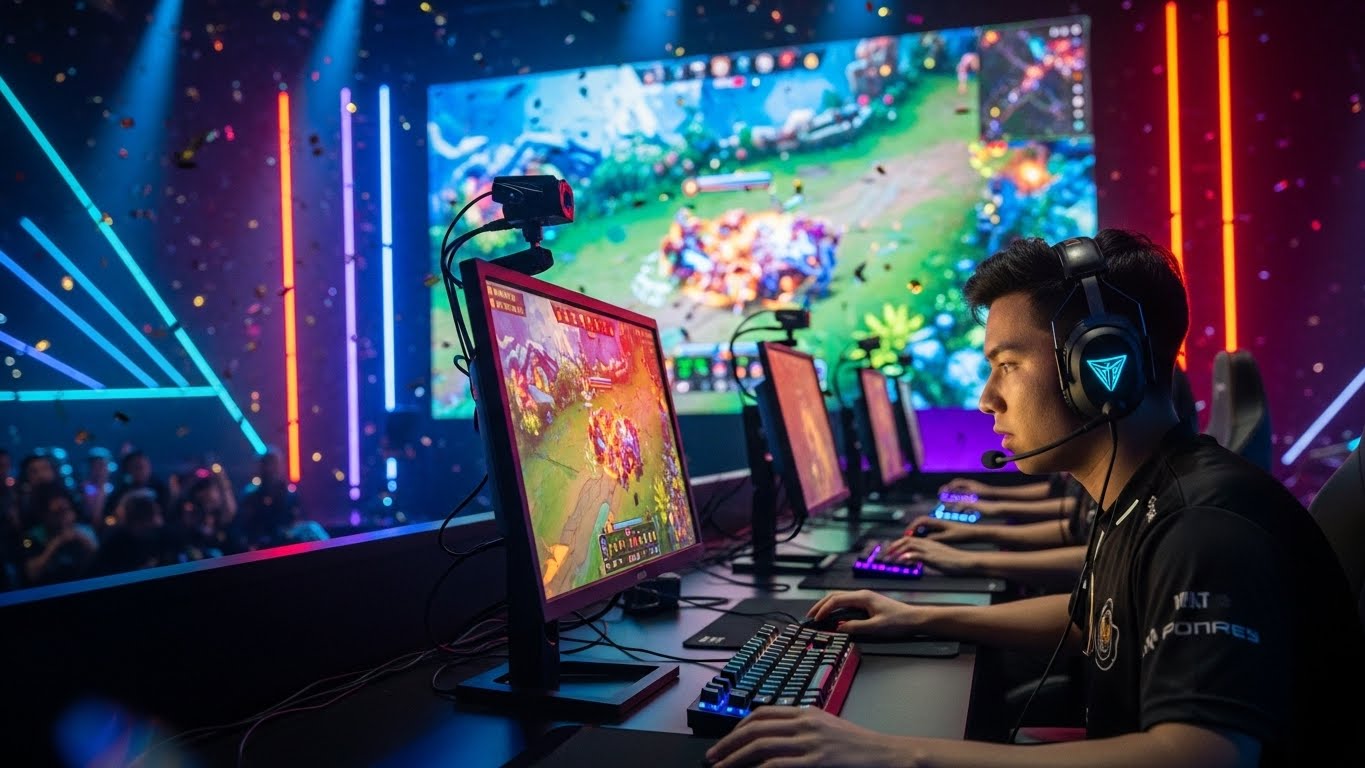
Esports tournaments have grown into grand spectacles comparable to traditional sports events. International competitions like the League of Legends World Championship, The International for Dota 2, and the Fortnite World Cup offer prize pools in the millions of dollars. These tournaments are broadcast across multiple platforms, attracting millions of viewers from around the world. Beyond the prize money, tournaments create opportunities for networking, brand promotion, and fan engagement, making them critical to the esports ecosystem. The spectacle of esports tournaments, complete with live audiences, professional commentary, and elaborate production, has elevated the industry to mainstream entertainment status.
The Role of Streaming Platforms
Streaming platforms have played a crucial role in the growth of esports. Platforms such as Twitch, YouTube Gaming, and others allow fans to watch live gameplay, interact with players, and follow tournaments in real time. These platforms have democratized access to competitive gaming, enabling amateur players to showcase their skills and gain recognition. Streaming also provides an avenue for esports players to connect with their audience directly, building personal brands and cultivating loyal fan bases. The symbiotic relationship between esports and streaming platforms has been pivotal in turning gaming into a spectator sport.
The Global Impact of Esports
Esports is not confined to a single region; it has become a global movement. Countries like South Korea, China, and the United States have emerged as esports powerhouses, with infrastructure, training facilities, and leagues dedicated to competitive gaming. In South Korea, esports is deeply embedded in popular culture, with professional players achieving celebrity status and competitions broadcast on national television. China has heavily invested in esports as part of its digital economy, fostering talent and hosting large-scale tournaments. This global reach has contributed to esports becoming a unifying force, connecting players and fans across borders through shared enthusiasm for gaming.
Economic Implications
The economic impact of esports is substantial. The industry generates revenue through sponsorships, advertising, ticket sales, merchandise, and media rights. Esports organizations operate similarly to traditional sports clubs, employing players, coaches, analysts, and marketing staff. Major companies invest heavily in esports to reach younger audiences, recognizing its potential as a marketing platform. In addition, esports has created new career paths, including content creation, event management, and analytics, demonstrating that the industry extends beyond the players themselves. The financial ecosystem surrounding esports is expected to continue expanding, reinforcing its significance as a major economic driver.
Esports and Education
The influence of esports has extended into education. Schools and universities have established esports programs, offering scholarships and competitive opportunities for students. These programs provide a structured environment for players to develop skills in teamwork, strategy, and leadership while pursuing academic goals. Educational institutions recognize that esports fosters problem-solving abilities, critical thinking, and technological literacy, which are valuable skills in the modern workforce. By integrating esports into education, institutions are legitimizing gaming as a productive and skill-building activity.
Social and Cultural Implications
Esports has not only transformed the gaming industry but also social and cultural landscapes. It has challenged stereotypes that portray gamers as isolated or unproductive. Instead, esports emphasizes collaboration, communication, and strategic thinking. The community aspect of esports fosters friendships, networking, and shared experiences among players and fans. Additionally, esports has encouraged diversity in gaming, with initiatives supporting female players, marginalized groups, and players from various socioeconomic backgrounds. The cultural influence of esports is evident in media, entertainment, and fashion, further solidifying its presence in mainstream society.
Technological Advancements Driving Esports
Technology has been a driving force behind the rapid growth of esports. High-speed internet, powerful gaming hardware, and advanced software have enabled competitive gameplay on a global scale. Innovations in graphics, virtual reality, and artificial intelligence continue to enhance the esports experience for players and spectators alike. Technology also facilitates data analytics, allowing teams to analyze performance metrics and develop advanced strategies. As technology evolves, esports will continue to push boundaries, integrating new tools and platforms to enhance competition and engagement.
Challenges and Criticisms
Despite its growth, esports faces challenges and criticisms. Concerns about player health, including mental health, burnout, and physical strain, have become increasingly prominent. The competitive environment can be stressful, with high expectations and constant pressure to perform. Additionally, issues such as cheating, online harassment, and unfair practices pose challenges for the industry. Regulatory frameworks and player support systems are still developing, highlighting the need for standards that protect players and maintain integrity. Addressing these challenges is essential to ensure the sustainability and positive development of esports.
The Future of Esports
The future of esports appears promising, with continued growth and innovation on the horizon. Emerging technologies such as virtual reality, augmented reality, and cloud gaming are likely to redefine how players compete and how audiences experience events. Esports may also increasingly intersect with traditional sports, media, and entertainment, creating hybrid experiences that appeal to diverse audiences. As more regions invest in infrastructure, talent development, and competitive leagues, esports is poised to become even more mainstream. Its potential to inspire, entertain, and connect people globally suggests that esports will remain a major cultural and economic force in the years to come.
Conclusion: A New Era of Competition
Esports has evolved from humble beginnings in arcades and local tournaments to a global industry with professional players, international competitions, and millions of fans. It represents a new era of competition where skill, strategy, and community converge in the digital world. The impact of esports extends beyond gaming, influencing education, culture, and the economy, while challenging traditional notions of sports and entertainment. As the industry continues to innovate and grow, esports is more than a pastime; it is a testament to the power of technology, creativity, and human ambition. The future of esports is bright, offering endless possibilities for players, fans, and the world of digital competition.