

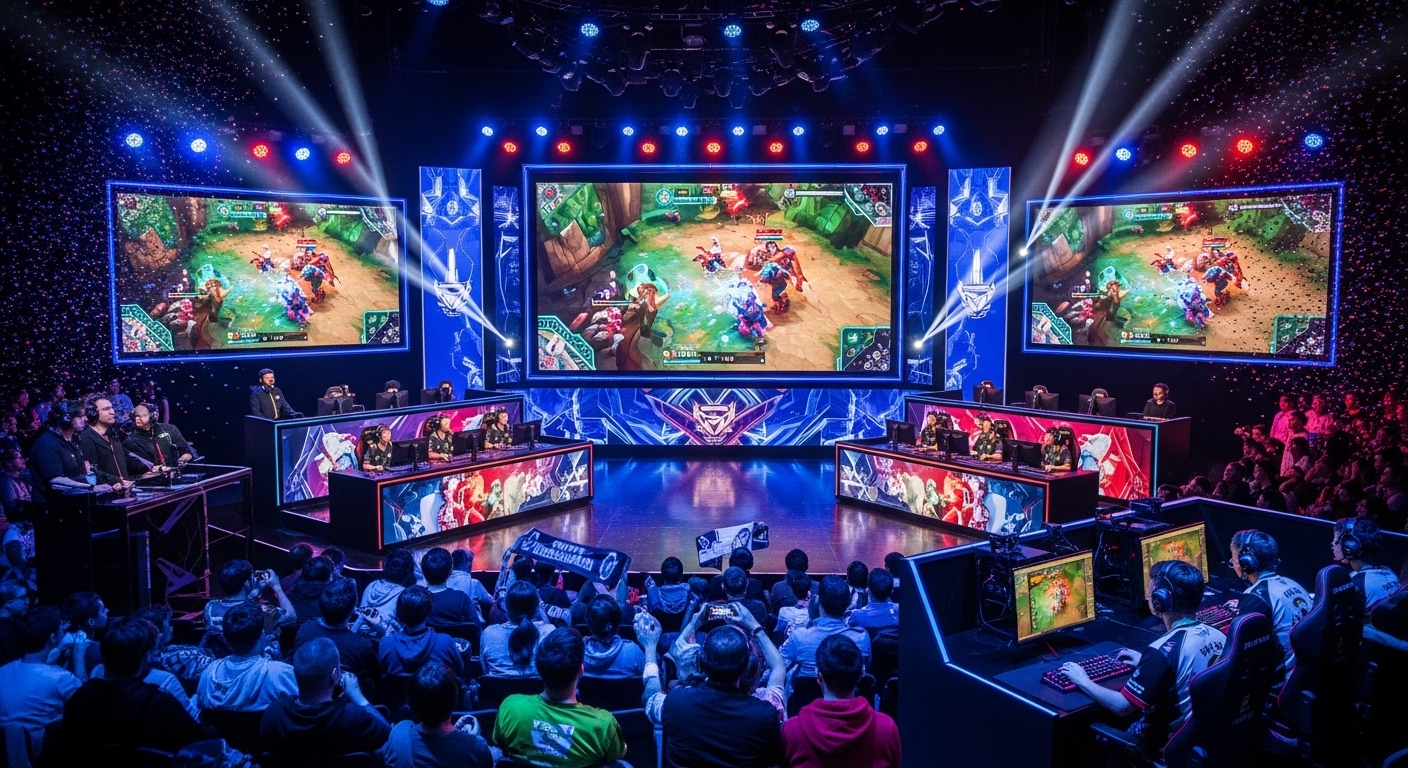
Esports, the world of competitive video gaming, has emerged as one of the most influential entertainment and sports sectors of the 21st century. Once dismissed as a casual hobby for a select few, esports has grown into a global industry with professional leagues, million-dollar prize pools, and a fanbase that spans every continent. It represents not just technological progress but also a cultural shift in how competition, entertainment, and community are perceived. This blog explores the history of esports, its rapid growth, its impact on society, and what the future holds for this dynamic industry.
The Origins of Competitive Gaming
The concept of competitive gaming dates back to the 1970s and 1980s, when arcade machines dominated entertainment centers. Players competed for high scores in games such as Space Invaders and Pac-Man, turning casual play into a measurable test of skill. These early competitions were informal but set the stage for structured tournaments in the decades to follow.
The 1980s and 1990s saw the rise of home consoles and personal computers, which allowed multiplayer gaming to flourish. Titles like Street Fighter, Warcraft, and Counter-Strike encouraged players to challenge each other directly. This period laid the foundation for esports by demonstrating that gaming could be more than a pastime—it could be a competitive and community-driven activity.
The Internet and the Rise of Online Competition
The advent of the internet in the 1990s transformed gaming from a local hobby into a global phenomenon. Online multiplayer games allowed players to connect across cities and countries, creating competitive environments on an unprecedented scale. Games like StarCraft, DotA, and Counter-Strike became platforms where skill, teamwork, and strategy were paramount.
Online forums, chat rooms, and fan communities also became crucial in shaping the early esports culture. Players shared strategies, organized competitions, and discussed gameplay in ways that were previously impossible. This digital connectivity allowed esports to move beyond local arcades and home networks into the global spotlight.
Professionalization of Esports
By the mid-2000s, esports had begun to professionalize. South Korea emerged as a pioneering hub for competitive gaming, particularly with StarCraft tournaments broadcast on national television. Professional players became celebrities, drawing large audiences and sponsorship deals.
Teams became structured organizations with coaches, analysts, and rigorous training schedules. Players devoted themselves full-time to mastering games, maintaining physical and mental health, and analyzing opponents. Esports leagues began offering significant prize money, further legitimizing competitive gaming as a professional career path.
Popular Esports Genres and Titles
Esports encompasses a wide array of games, each with distinct mechanics and competitive strategies. Multiplayer online battle arenas (MOBAs) such as League of Legends and Dota 2 emphasize teamwork, coordination, and complex strategy. First-person shooters (FPS) like Counter-Strike: Global Offensive and Call of Duty require precision, reflexes, and tactical thinking.
Fighting games such as Street Fighter and Tekken offer intense, one-on-one competition, while real-time strategy (RTS) games like StarCraft II test players’ ability to manage resources, units, and timing. Sports simulations like FIFA and NBA 2K replicate real-world athletics in digital arenas. This diversity of genres ensures that esports appeals to a wide audience and supports multiple competitive ecosystems.
Major Tournaments and Global Recognition
Esports tournaments are central to its growth and popularity. Events such as The International for Dota 2, the League of Legends World Championship, and CS:GO Major Championships attract millions of viewers worldwide and offer prize pools that reach tens of millions of dollars.
Live streaming platforms allow fans to watch matches in real-time, engage with commentators, and interact with the player community. The accessibility of streaming has transformed esports into a spectator sport, enabling audiences to follow their favorite teams and players without the need for traditional television broadcasts.
Careers in Esports
Esports is not just about playing competitively; it has created a full ecosystem of careers. Professional players earn salaries, sponsorships, and tournament winnings. Coaches, analysts, commentators, and event organizers all contribute to the industry. Content creators and streamers build personal brands, engaging with fans while promoting games and tournaments.
Educational institutions have also begun recognizing esports, offering scholarships, training programs, and dedicated esports teams. These developments highlight the growing legitimacy of esports as a career path and an area of academic and professional focus.
The Role of Streaming and Content Creation
Streaming platforms have revolutionized esports by allowing players to share their gameplay, strategies, and personalities with millions of fans. Streamers often serve as ambassadors for games, expanding their reach and influence. Live streams create a dynamic and interactive experience, where viewers can comment, ask questions, and even influence in-game decisions.
This combination of competition and content creation creates a symbiotic ecosystem. Professional players stream to maintain fan engagement, while tournaments benefit from the promotion and exposure that streamers provide. Content creation also diversifies the revenue streams within esports, supporting players and organizations beyond tournament winnings.
Esports and Traditional Sports
Esports is increasingly recognized alongside traditional sports. Major sports teams and organizations invest in esports teams, acknowledging the parallels between physical and digital competition. Universities offer esports programs alongside traditional athletics, providing scholarships and facilities for competitive gaming.
While esports is digital, it requires mental agility, strategy, teamwork, and endurance, similar to traditional sports. The rise of esports challenges conventional notions of athleticism and competition, proving that skill and dedication in a digital arena can be as demanding and rewarding as on a physical field.
Cultural and Social Impact of Esports
Esports has become more than just a competition—it is a cultural movement. It connects people across languages, countries, and age groups. Online communities provide social interaction, collaborative opportunities, and a sense of identity. For many, esports is a platform for self-expression, creativity, and personal achievement.
The culture surrounding esports extends into fashion, music, and lifestyle. Fans wear jerseys, follow players on social media, and attend live events. Esports has created a unique culture that blends gaming, community, and entertainment, influencing a generation and redefining digital interaction.
Challenges Facing the Esports Industry
Despite rapid growth, esports faces several challenges. Player health is a significant concern, as long hours of practice and high-pressure tournaments can lead to burnout and physical strain. Maintaining mental wellness and promoting balanced schedules are crucial for sustainability.
Additionally, online gaming environments can be plagued by cheating, harassment, and toxicity. Organizations are working to implement fair play regulations, anti-cheating measures, and community guidelines. Ensuring the ethical and responsible development of esports will be vital for its long-term success.
The Future of Esports
The future of esports is bright and evolving. Emerging technologies such as virtual reality, augmented reality, and artificial intelligence promise to enhance gameplay, training, and spectator experiences. Mobile esports is expanding rapidly, making competitive gaming accessible to a larger and more diverse audience.
Esports may continue to integrate with mainstream entertainment, attracting sponsorships from global brands, collaborations with media companies, and recognition in traditional sports circuits. The professionalization and inclusivity of the industry are expected to grow, supporting players, organizers, and fans worldwide.
Conclusion
Esports has grown from arcade competitions and local tournaments into a global industry with professional players, millions of fans, and substantial economic impact. It represents the convergence of technology, competition, and culture, creating a form of entertainment that is participatory, spectator-friendly, and community-driven.
The rise of esports reflects broader societal shifts, including the digitalization of leisure, the growth of online communities, and the legitimacy of virtual skill as a form of competition. While challenges remain, the industry’s rapid growth and mainstream acceptance suggest that esports will continue to thrive.
Ultimately, esports is more than gaming. It is a testament to human creativity, strategy, and collaboration in the digital age. It redefines competition, connection, and achievement, proving that the virtual world can have a significant and lasting impact on the real world.