

Introduction
In the last two decades, few industries have evolved as dramatically as esports. Once considered a niche hobby confined to arcades and bedroom LAN parties, esports has transformed into a billion-dollar global phenomenon that rivals traditional sports in viewership, sponsorship, and cultural influence. The world of competitive gaming has redefined what it means to be an athlete, reshaped entertainment, and created entirely new economies built around virtual competition.
Esports is not just about playing games; it represents a fusion of technology, creativity, competition, and community. The players, teams, broadcasters, and fans have turned it into a living, breathing ecosystem that continues to grow every year. To understand its significance, one must look at how esports began, how it has evolved, and what it tells us about the future of both gaming and global culture.
The Origins of Esports
The concept of competitive gaming did not appear overnight. The seeds of esports were planted as early as the 1970s when the first video games began appearing on home consoles and arcade machines. One of the earliest recorded competitive gaming events took place at Stanford University in 1972, when students competed in the game “Spacewar!” for a subscription to Rolling Stone magazine.
By the 1980s, arcade titles like Pac-Man, Donkey Kong, and Space Invaders inspired the first wave of high-score competitions. Players would travel to local arcades or submit photos of their scores to gaming magazines, hoping to be crowned the best in the world. Television shows even began to feature these contests, creating a small but loyal audience.
The 1990s saw the first signs of modern esports structure. With the rise of PC gaming, titles such as Doom, Quake, and StarCraft gave birth to organized tournaments. South Korea, in particular, became a hotbed for professional gaming, thanks to widespread broadband access and a cultural enthusiasm for competitive play. Professional leagues, dedicated gaming channels, and sponsored teams started appearing across the country, marking the true beginning of esports as an organized industry.
The Evolution into a Global Industry
By the early 2000s, gaming technology and internet connectivity had advanced enough to enable large-scale online competitions. Games like Counter-Strike, Warcraft III, and Halo built communities that spanned continents. LAN tournaments became major events, drawing thousands of players and spectators.
The launch of streaming platforms, especially Twitch and YouTube, completely changed the landscape. Esports was no longer limited to live audiences in arenas — millions could now watch from their homes in real time. This accessibility turned competitive gaming into a spectator sport for the digital age.
Major tournament organizers like the Electronic Sports League (ESL), Major League Gaming (MLG), and DreamHack emerged, hosting events that attracted corporate sponsors and massive prize pools. The 2010s marked a turning point: esports was no longer a subculture. It had entered the mainstream.
The Major Games that Shaped Esports
Certain games have played a defining role in esports’ rise, becoming cornerstones of the industry. Each has its own community, style, and legacy that contributes to the diversity of the scene.
League of Legends
Launched in 2009 by Riot Games, League of Legends (LoL) quickly became one of the world’s most popular esports titles. With its fast-paced gameplay, deep strategy, and regular updates, LoL built a massive global player base. The annual League of Legends World Championship attracts millions of viewers and offers prize pools that rival those of traditional sports tournaments.
Counter-Strike
From its roots as a modification of Half-Life, Counter-Strike evolved into one of the most enduring competitive shooters in history. Titles like Counter-Strike: Global Offensive (CS:GO) became synonymous with precision, teamwork, and strategy. The game’s simple but deep mechanics make it a perfect competitive experience.
Dota 2
Valve’s Dota 2 is another titan of the esports world. Known for its complexity and massive international following, it hosts “The International,” a yearly tournament with record-breaking prize pools funded largely by the community itself.
Fortnite
Epic Games’ Fortnite brought a new generation of gamers into esports. Blending the battle royale format with colorful visuals and accessible gameplay, it became a cultural phenomenon. Its tournaments have featured multimillion-dollar prizes and have helped define esports for younger audiences.
Other Key Titles
Beyond these giants, games like Overwatch, Call of Duty, Valorant, Apex Legends, Rocket League, and PUBG have all carved their place in the esports ecosystem. Each appeals to different audiences, showcasing the diversity and creativity that keeps the industry thriving.
Esports Infrastructure: Teams, Leagues, and Organizations
Professional esports is built around structured competition. Just like in traditional sports, teams and leagues form the foundation of the ecosystem.
Teams and Players
Professional teams like T1, Cloud9, FaZe Clan, G2 Esports, and Team Liquid are household names among fans. These organizations operate much like traditional sports franchises — recruiting talent, managing branding, securing sponsorships, and building fanbases. Players often train full-time, follow strict practice schedules, and receive coaching in strategy, mental health, and even physical fitness.
Top-tier esports players can earn substantial salaries through team contracts, sponsorships, and streaming. Some have achieved celebrity status, with fan followings rivaling those of movie stars or athletes.
Leagues and Tournaments
Esports leagues are structured across different levels. Some, like the League of Legends Championship Series (LCS) or the Overwatch League (OWL), use a franchise model similar to the NBA or NFL, where teams buy into the league. Others, like CS:GO and Dota 2 circuits, operate through open tournaments and regional qualifiers.
Global championships such as The International or the LoL Worlds are watched by millions, filling entire arenas and drawing online audiences that surpass even major traditional sporting events.
The Role of Technology in Esports Growth
Esports owes its existence to technology, and its evolution mirrors the advances in digital infrastructure.
High-speed internet made global competition possible. Cloud gaming, advanced graphics, and virtual reality have all influenced the spectator experience. Streaming technology, particularly live broadcasting platforms, turned esports into an entertainment medium accessible to anyone with a smartphone or computer.
Social media also played a crucial role. Platforms like Twitter, Discord, and Reddit allowed fans to discuss strategies, share highlights, and connect directly with players. This level of interaction created a sense of community unmatched by traditional sports, where fans often remain distant from athletes.
Moreover, the rise of data analytics, AI coaching tools, and virtual training environments has taken esports professionalism to new heights. Teams now use technology to track player performance, optimize strategies, and enhance decision-making, much like how football or basketball teams use advanced statistics.
The Esports Audience: A Global Community
Esports is truly global. From North America and Europe to South Korea, China, and Southeast Asia, the fanbase is diverse, passionate, and growing rapidly.
Young audiences, particularly those aged 16–34, form the core demographic. Many of these fans grew up playing video games and find esports a natural extension of their interests. Unlike traditional sports, which are often regional, esports transcends borders. A fan in Brazil can support a team in Korea just as easily as one in the United States.
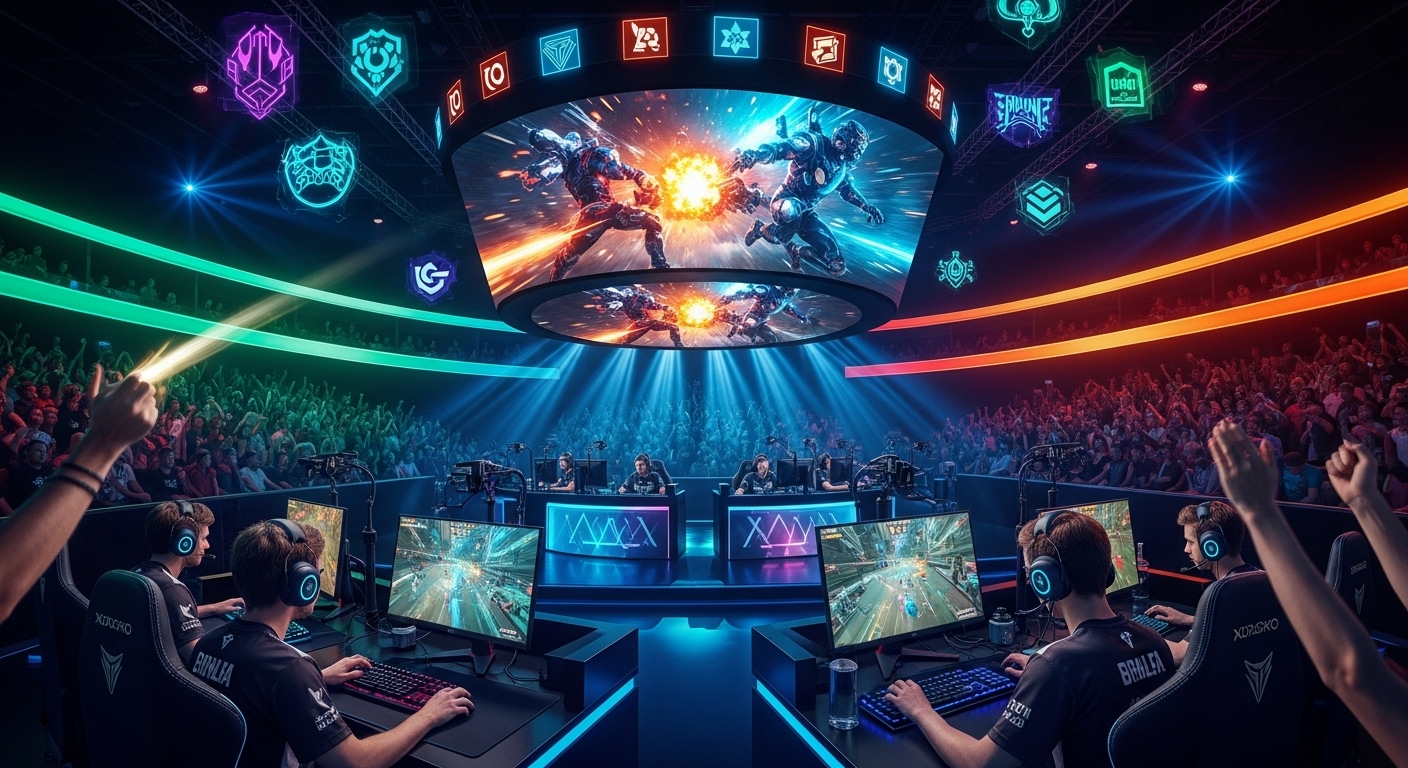
Live events add to the excitement. Stadiums in Seoul, Shanghai, and Los Angeles have hosted sold-out esports finals. The combination of digital interaction and real-world gatherings gives esports a unique dual identity — both a virtual and physical community.
The Economics of Esports
Esports has become a major commercial enterprise. Revenues come from multiple streams: advertising, sponsorships, media rights, ticket sales, and merchandise.
Brands ranging from technology giants to car manufacturers and fashion labels have entered the scene, recognizing esports’ ability to reach young, tech-savvy audiences. Sponsorships fund tournaments and support teams, while media rights bring additional income through broadcasting deals.
Prize money is another key feature. Some tournaments boast multi-million-dollar pools, rewarding not only the players but also driving attention and participation. Beyond the professionals, esports has also spawned a massive ecosystem of content creators, streamers, and influencers who contribute to its ongoing expansion.
The Professional Player’s Journey
Becoming a professional esports player is no small feat. It requires years of dedication, practice, and mental toughness. Unlike casual gaming, professional play is highly competitive and structured.
Aspiring players usually start by climbing online leaderboards or joining local tournaments. Successful amateurs may get noticed by scouts or organizations and be invited to join semi-professional teams. From there, consistent performance can lead to contracts with top organizations.
Professional players train rigorously, often practicing for 8–12 hours per day. They work with coaches, strategists, and analysts to perfect their gameplay. Mental and physical conditioning are also essential, as burnout and stress are common issues.
Just like in traditional sports, careers can be short. Reaction time, motivation, and adaptability all play roles in longevity. However, many players transition to other roles after retirement — becoming coaches, streamers, commentators, or team managers.
The Cultural Impact of Esports
Esports has done more than redefine competition; it has reshaped culture.
Gaming is no longer a solitary pastime. It’s a shared experience, one that brings together people across languages, borders, and backgrounds. Esports events are social celebrations, featuring music, art, and fan culture similar to concerts or sports finals.
Pop culture has embraced gaming icons, from characters to streamers. Music artists, movie studios, and fashion brands collaborate with esports organizations. Universities now offer scholarships for competitive gaming, and entire degrees are being built around esports management.
In essence, esports has blurred the lines between entertainment, sport, and digital art. It represents a generational shift — one where digital experiences carry as much meaning as physical ones.
Challenges Facing the Esports Industry
Despite its success, esports faces numerous challenges.
One of the biggest is sustainability. While large tournaments and top-tier teams thrive, smaller leagues and less popular games struggle to maintain financial stability. The industry’s rapid growth has also created volatility, with organizations entering and exiting frequently.
Player health is another concern. The demanding schedules and intense mental strain can lead to burnout, physical strain, or emotional exhaustion. Many organizations are now investing in wellness programs and balanced training routines.
Esports also faces questions about regulation and integrity. Issues such as cheating, match-fixing, and doping have occasionally surfaced, prompting calls for standardized rules and oversight bodies.
Furthermore, gender diversity remains limited. Although there are many talented women in esports, the industry is still largely male-dominated. However, movements advocating inclusivity and representation are gaining momentum, pushing for a more equitable future.
The Future of Esports
The future of esports looks promising. Technological innovation continues to expand its possibilities, from virtual reality competitions to AI-enhanced analytics and immersive spectator experiences.
Esports is also entering education. Universities and high schools worldwide now recognize competitive gaming as a legitimate extracurricular activity. Esports scholarships, academic programs, and dedicated facilities are becoming commonplace.
On a global scale, more countries are embracing esports as an official sport. Some governments have begun granting athlete visas to professional players, acknowledging their status alongside traditional athletes. The inclusion of esports in events like the Asian Games is further validation of its legitimacy.
Looking ahead, the boundary between physical and digital sports may continue to blur. With the rise of the metaverse and augmented reality, the concept of competition itself is evolving. Esports is positioned at the forefront of this transformation — a symbol of how technology and human ambition can combine to create new forms of achievement and entertainment.
Conclusion
Esports is more than a trend; it’s a revolution in how humanity approaches play, competition, and community. From humble beginnings in arcades and college dorms to global stages packed with millions of fans, it stands as proof that gaming has become a cultural and professional powerhouse.
It bridges generations, unites people across continents, and redefines what success looks like in the modern world. Esports athletes, organizers, and fans together have created something extraordinary — a new kind of sporting legacy born in the digital era.
As technology continues to evolve, so too will esports. What began as a passion for games has become a worldwide celebration of skill, creativity, and connection. Whether one is a player, a fan, or an observer, the rise of esports reminds us that competition and community can flourish in any arena — even one made of pixels.