

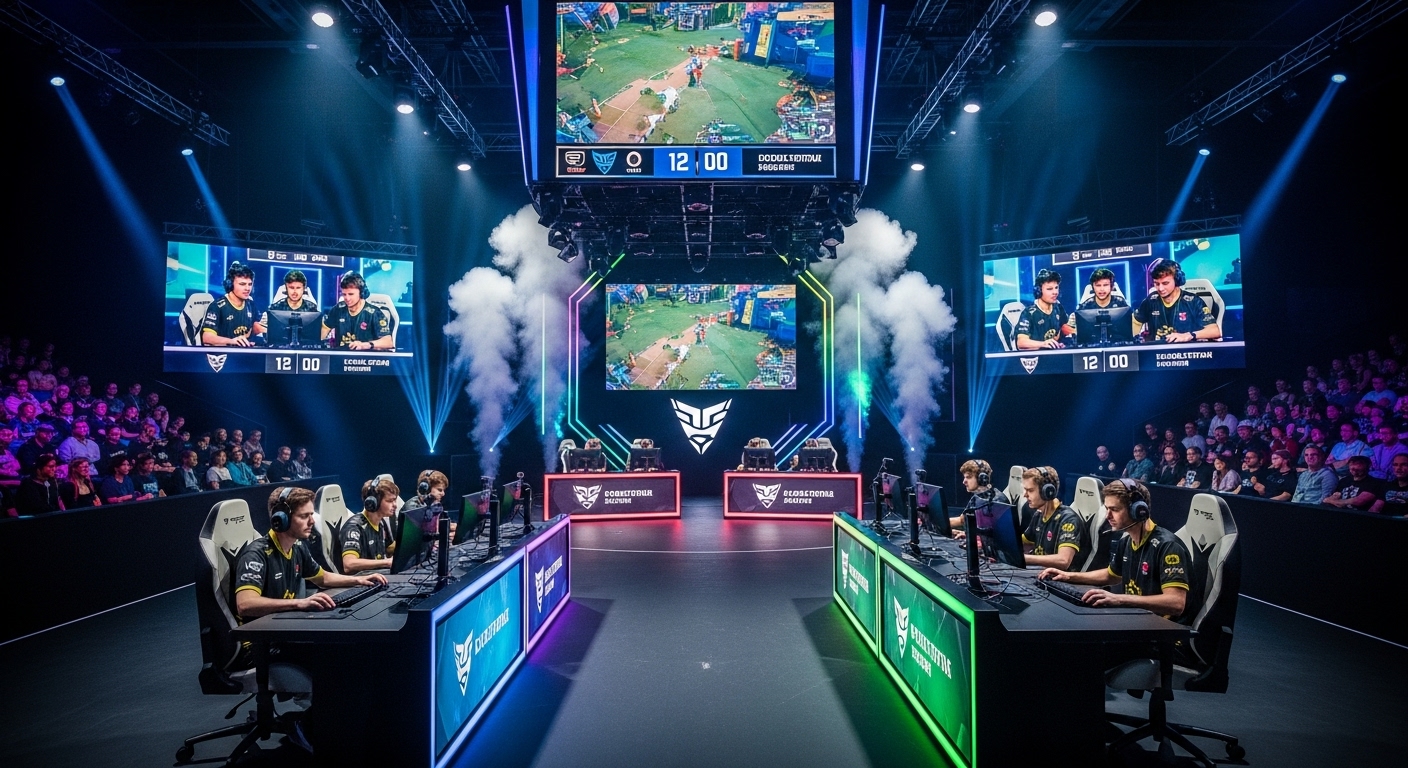
Esports, once a niche hobby for dedicated gamers, has rapidly evolved into a global entertainment powerhouse. With its expansive growth, esports now attracts millions of fans worldwide, offering both participants and viewers an entirely new form of entertainment. From grassroots tournaments to massive, multi-million-dollar championships, esports has transformed into an industry that rivals traditional sports in scale, viewership, and financial backing. In this blog post, we’ll explore the rise of esports, its current standing, and its promising future.
The Birth of Esports: From Backyard Battles to International Competitions
The story of esports begins in the late 20th century when competitive gaming was still a fringe activity. In the early 1970s, one of the first known competitive video game events, the Intergalactic Spacewar Olympics, took place at Stanford University, sparking the idea that games could be competitive on a larger scale. However, it wasn’t until the late 1990s and early 2000s that esports began to take shape, thanks to the increasing popularity of multiplayer games and internet accessibility.
In the early days, competitive gaming mostly revolved around LAN (Local Area Network) parties, where players would gather in a physical space to play against each other. These small gatherings allowed a small community of gamers to bond over shared interests and test their skills in games like Quake and StarCraft. While these early tournaments were more local than global, they laid the foundation for the esports we know today.
As online gaming became more accessible, the stage was set for esports to reach new heights. The growth of gaming platforms like Battle.net and Steam helped push online multiplayer games into the mainstream, and tournaments soon became more organized and widespread.
Esports Explosion: Global Tournaments and Streaming Platforms
The true explosion of esports came with the advent of games like League of Legends, Dota 2, and Counter-Strike: Global Offensive. These titles not only garnered huge fan followings but also became the centerpiece of organized competitive events with massive prize pools. The League of Legends World Championship, first held in 2011, became one of the most-watched esports events globally, with millions of viewers tuning in to watch teams battle for the title. Similarly, Dota 2’s The International offers some of the largest prize pools in the industry, sometimes surpassing $40 million in total rewards.
With these high-stakes competitions, esports started attracting sponsors and media attention, catapulting the industry from a fringe activity to a mainstream phenomenon. Streaming platforms like Twitch allowed fans to watch live gameplay, while simultaneously fostering interaction between players and their audiences. The direct connection between gamers and fans opened up opportunities for creators to build a massive following, turning esports players into celebrities in their own right.
The Esports Ecosystem: A Thriving Industry with Multiple Layers
Esports has evolved into an intricate ecosystem, supported by numerous components that make it a fully-fledged industry. From players to fans, brands, and broadcasters, every part of the esports world plays a role in driving its success.
Professional Teams and Leagues
Much like traditional sports leagues such as the NBA or NFL, esports has professional teams, coaches, analysts, and managers. Teams in games like League of Legends, CS:GO, and Overwatch have become major brands in themselves, with sponsorships from global companies like Intel, Coca-Cola, and Mercedes-Benz. These teams compete in leagues such as the League of Legends Championship Series (LCS) and Overwatch League (OWL), where players battle for glory and significant financial rewards.
Players and Personalities
Professional esports players are no longer just anonymous names behind screens. Many players have become household names, amassing large followings on social media and streaming platforms. Faker, a League of Legends legend, and N0tail, the Dota 2 superstar, have earned millions through tournament winnings, sponsorships, and streaming. These players are not just competitors; they are influencers with global reach, shaping the culture of esports and gaming as a whole.
Sponsors and Partnerships
As esports’ popularity grew, so did its financial backing. Major global brands recognized the potential to connect with younger, tech-savvy audiences through sponsorships. The influx of investment has allowed for larger prize pools, better tournament production, and increased exposure for the esports industry. These sponsors, ranging from tech companies like NVIDIA to consumer goods giants like Red Bull, help fund the vast machinery that powers esports events, teams, and content.
Fans and Community Engagement
The lifeblood of esports is its fanbase. With a global audience, esports transcends national borders, bringing together diverse groups of fans. These fans engage with their favorite teams and players on platforms like Twitch, YouTube, and Twitter, discussing strategies, sharing content, and celebrating victories. The interactive nature of esports, where fans can participate in live streams, donate to players, and even interact during tournaments, has created a new type of entertainment where fan engagement is just as important as the games themselves.
Esports as a Career: The Professionalization of Gaming
One of the most fascinating aspects of esports’ rise is the transformation of gaming into a legitimate career. As the industry matured, players began to receive professional salaries, sponsorships, and benefits. Just like athletes in traditional sports, top esports players now have full-time jobs, training schedules, and support teams that help them hone their skills and compete at the highest levels.
Coaches, analysts, content creators, and team managers are also integral parts of the ecosystem. The value of data and analytics has become increasingly important in esports, with teams employing analysts to study their opponents, identify trends, and develop winning strategies. In addition, many professional players have turned to streaming and content creation as supplemental careers, further enhancing their income and broadening their reach.
The Global Appeal of Esports: A Cultural Movement
One of the most remarkable aspects of esports is its ability to cross cultural and geographic boundaries. Fans from all corners of the globe tune in to watch tournaments, forming a diverse community that speaks the universal language of gaming. Unlike traditional sports, where local teams often represent specific cities or regions, esports features global teams that compete against each other on a level playing field.
As esports has become more international, the industry has also become a vehicle for global collaboration and competition. Players from countries like South Korea, China, North America, and Europe regularly face off in high-stakes competitions. For example, South Korean players have historically dominated StarCraft and League of Legends, while European and North American teams have risen to prominence in games like Counter-Strike and Fortnite.
Esports also has the unique ability to bring people together through shared experiences. Online multiplayer games, live streams, and even esports-related conventions allow fans to interact with each other, often forming friendships and bonds that extend beyond the virtual world.
The Future of Esports: Growth, Innovation, and New Frontiers
Looking ahead, the future of esports appears to be incredibly bright. As the industry continues to grow, new technologies and innovations are likely to shape its evolution. Virtual reality (VR) and augmented reality (AR) could bring new levels of immersion to esports competitions, creating more engaging experiences for both players and fans. Imagine watching an esports event in VR, where you can view the action from any angle or even participate in the game yourself!
Additionally, the rapid growth of mobile gaming has the potential to bring esports to a whole new audience. Games like PUBG Mobile, Mobile Legends, and Clash Royale have already seen immense success in Asia and other regions. As mobile technology improves, mobile esports could become as big as PC and console gaming, with its own tournaments, leagues, and global competitions.
Esports’ potential to be included in major sporting events, including the Olympics, further underscores its global significance. The idea of esports becoming an Olympic sport is being actively discussed, and this could provide an entirely new platform for esports to reach an even wider audience.
Conclusion: Esports Is Here to Stay
Esports has come a long way since its humble beginnings as small LAN tournaments. Today, it is a billion-dollar industry with a global following, a testament to the immense passion, dedication, and skill of its players and fans. With professional teams, top-tier sponsorships, global tournaments, and a fanbase that spans continents, esports is now a mainstay in the world of entertainment.
As the industry continues to evolve and new technologies emerge, the future of esports is boundless. Whether you’re a casual gamer or a dedicated esports fan, there’s no denying that esports is reshaping the way we view competitive gaming—and it’s only going to get bigger.