

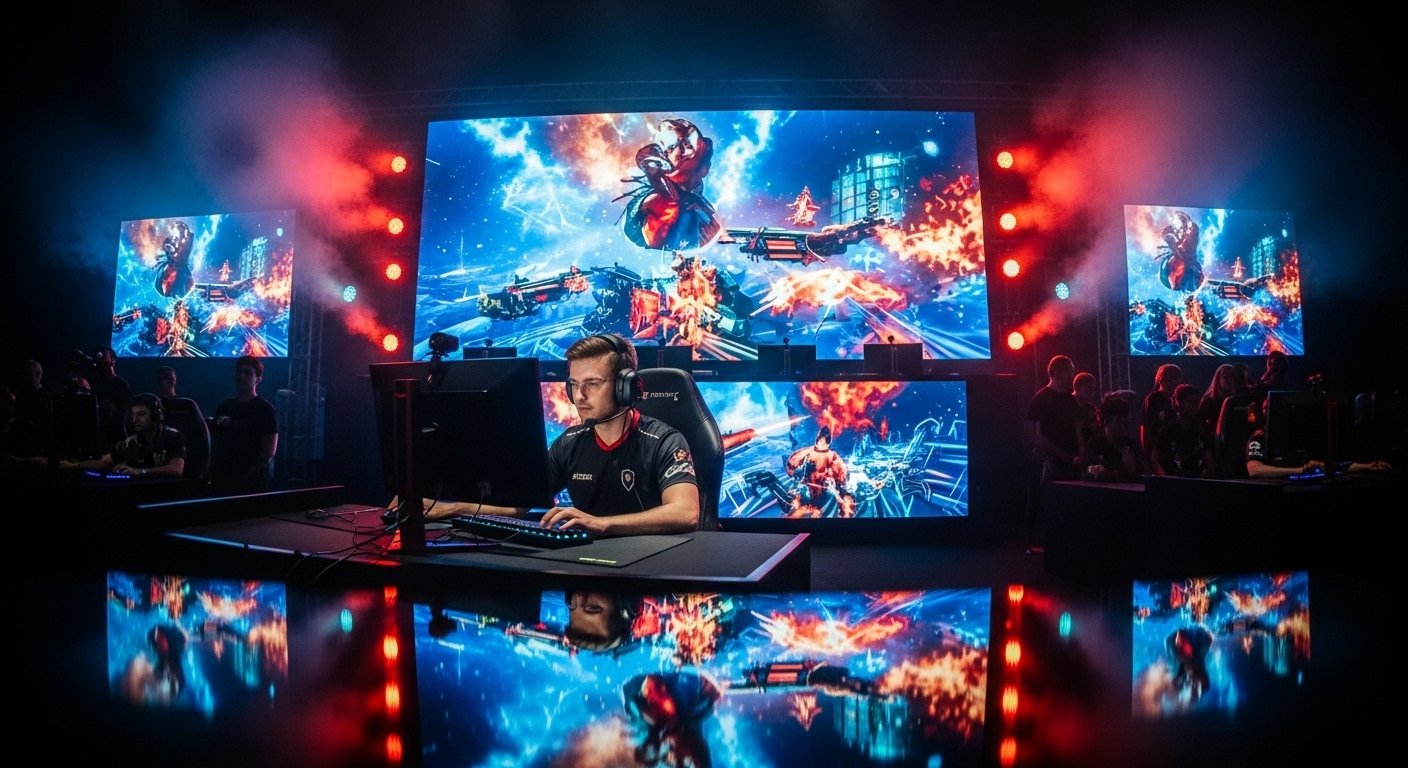
Introduction: Esports in the Modern Era
Esports, or electronic sports, has become one of the most influential sectors in global entertainment. What once began as informal competitions among friends in arcades and online chat rooms has evolved into a billion-dollar industry that rivals traditional sports in both popularity and economic impact. Professional players, high-stakes tournaments, live streaming, sponsorships, and passionate fanbases have all contributed to making esports a mainstream phenomenon.
The appeal of esports lies in its combination of competition, strategy, skill, and entertainment. Unlike traditional sports that rely on physical prowess, esports emphasizes mental agility, coordination, teamwork, and reflexes. This unique blend has allowed esports to grow rapidly and captivate audiences worldwide. The industry’s digital foundation ensures that players, teams, and fans from across the globe can connect seamlessly, making it a truly international form of entertainment.
This blog explores the history, development, key games, cultural significance, industry mechanics, challenges, and future of esports, highlighting why it has become a defining force in modern entertainment.
The Origins of Competitive Gaming
The roots of esports trace back to the late 1970s and 1980s, when arcade competitions and early video game tournaments started to appear. Games like Space Invaders, Pac-Man, and Donkey Kong became popular not only for entertainment but also for high-score competitions. Players competed to achieve the highest score, and local arcades would often recognize champions with trophies or recognition, creating a sense of prestige and community.
In the 1990s, the rise of personal computers and networked gaming allowed competitive gaming to expand. Games like Doom, Quake, and StarCraft introduced multiplayer modes where players could face off against each other online. StarCraft, in particular, became a cultural phenomenon in South Korea, where professional leagues were formed, players achieved celebrity status, and televised matches attracted massive audiences. These early developments laid the foundation for the professional esports ecosystem we see today.
The 1990s also saw the emergence of organized tournaments in North America and Europe, although they remained niche compared to mainstream sports. However, these events highlighted the growing appetite for competitive gaming and demonstrated that video games could be more than casual entertainment—they could be a serious pursuit for skilled players.
The Rise of Professional Esports
The 2000s marked a turning point for esports, as technological advancements and internet connectivity allowed for global competitions and professional leagues. Multiplayer online games such as Warcraft III, Counter-Strike, and DotA became central to the competitive gaming scene. International tournaments began offering significant prize money, attracting skilled players who could now pursue gaming as a full-time career.
South Korea led the professionalization of esports, building arenas, forming leagues, and creating a cultural infrastructure around gaming. Professional players were treated as celebrities, with sponsorship deals, media appearances, and fan clubs. This model spread to other countries, inspiring the creation of professional teams and leagues in North America, Europe, and China.
Streaming technology further accelerated esports’ growth. Platforms like Twitch and YouTube Gaming allowed fans to watch live competitions, interact with commentators, and follow players closely. The ability to broadcast tournaments to a global audience increased the popularity of esports and drew sponsorships from major brands, solidifying its legitimacy as a professional industry.
Popular Esports Genres and Games
Esports encompasses a wide variety of games, each with its unique style, mechanics, and fanbase. The following are the most prominent genres and their impact on competitive gaming:
Multiplayer Online Battle Arena (MOBA) Games
MOBA games, such as League of Legends and Dota 2, have become some of the most popular esports titles worldwide. They require strategic planning, teamwork, quick decision-making, and precise execution. These games often feature complex mechanics, diverse characters, and tactical depth, attracting both players and viewers seeking intricate gameplay. Tournaments like the League of Legends World Championship and The International for Dota 2 offer prize pools that reach tens of millions of dollars, reflecting the genre’s popularity.
First-Person Shooter (FPS) Games
FPS games like Counter-Strike: Global Offensive, Valorant, and Call of Duty demand exceptional reflexes, aim, communication, and team coordination. These games often have fast-paced action and high stakes, creating a thrilling experience for both players and spectators. FPS esports tournaments regularly draw large online audiences, and professional players in this genre often achieve celebrity status.
Battle Royale Games
Battle Royale titles such as Fortnite and PUBG have introduced a new style of competitive gaming, where large numbers of players compete in last-man-standing formats. These games combine survival strategy, combat skill, and resource management, appealing to casual players and professionals alike. Fortnite’s high-profile tournaments have attracted international attention and sponsorships, demonstrating the genre’s impact on esports culture.
Sports Simulation and Fighting Games
Sports simulation games like FIFA and NBA 2K, as well as fighting games like Street Fighter and Super Smash Bros., provide competitive environments rooted in traditional sports or action-oriented gameplay. These games appeal to a wide audience and often have dedicated professional circuits. Players in these genres combine technical skill with deep knowledge of the game mechanics, leading to high-level competitions that draw both fans and media attention.
Esports as a Professional Career
Esports offers a viable career path for talented players, coaches, analysts, and support staff. Professional players train rigorously, often dedicating six to ten hours per day to practice, reviewing game footage, analyzing strategies, and improving teamwork. Like traditional athletes, esports professionals require mental focus, physical endurance, and strategic thinking to excel in competitions.
Professional esports teams operate similarly to traditional sports organizations. They employ coaches, analysts, and managers to optimize performance and support players’ health and well-being. Teams invest in training facilities equipped with high-end computers, ergonomic setups, and team meeting spaces, providing players with professional environments to develop their skills.
Top esports players often earn substantial incomes through tournament winnings, salaries, sponsorships, and streaming revenue. They also build personal brands, creating social media content, merchandise, and collaborations with gaming companies. Esports careers extend beyond playing; analysts, commentators, and content creators play critical roles in sustaining the industry.
The Global Esports Industry
Esports has grown into a multi-billion-dollar global industry, encompassing tournaments, sponsorships, media rights, merchandise, and digital content. Asia, particularly South Korea and China, has been at the forefront of esports development, with dedicated arenas, televised matches, and highly competitive leagues. North America and Europe have also contributed significantly, hosting large tournaments and cultivating professional teams with global recognition.
Major tournaments often rival traditional sporting events in terms of production, viewership, and prize money. The Dota 2 International and League of Legends World Championship regularly offer prize pools exceeding ten million dollars. Sponsors such as Intel, Coca-Cola, Red Bull, and Nike have embraced esports, highlighting its marketing potential and global appeal.
Streaming platforms have played a pivotal role in esports’ growth. Twitch, YouTube Gaming, and other services allow live broadcasting of matches, creating opportunities for fan engagement, advertising revenue, and brand partnerships. Esports viewership continues to expand, with millions tuning in to watch tournaments, follow favorite players, and engage with the community.
Cultural Impact and Community Engagement
Esports has reshaped how gaming is perceived culturally. It has transformed from a recreational hobby to a respected form of competition, providing a platform for players to showcase skill, creativity, and strategy. The cultural significance of esports extends beyond the games themselves, influencing fashion, music, media, and social trends.
Esports communities foster social connection, engagement, and shared identity. Fans form online groups, attend live events, and interact with players through streaming platforms. The sense of belonging within esports communities is similar to traditional sports fandoms, offering support, camaraderie, and collective excitement.
Moreover, esports has created opportunities for education and personal development. Universities and high schools now offer esports programs, scholarships, and professional training. These initiatives provide structured pathways for aspiring players, coaches, and content creators, highlighting esports’ growing legitimacy as a career and educational pursuit.
Technology as the Backbone of Esports
Technology is the foundation of esports, driving gameplay, streaming, broadcasting, and global connectivity. High-performance computers, fast internet connections, and advanced graphics engines enable immersive gaming experiences for both players and viewers.
Artificial intelligence and data analytics enhance competitive play, providing insights into player performance, game strategy, and opponent tendencies. VR and AR technologies promise even more immersive esports experiences, creating interactive environments where players and spectators can engage in entirely new ways.
The continuous evolution of technology ensures that esports remains at the forefront of innovation. From live broadcasting to in-game analytics, technology enhances competitiveness, audience engagement, and entertainment value.
Challenges in Esports
Despite its rapid growth, esports faces challenges related to sustainability, inclusivity, and player well-being. Mental health concerns are significant, as professional players endure long hours of practice, high-pressure competition, and public scrutiny. Organizations are increasingly implementing wellness programs, mental coaching, and structured schedules to support players’ overall health.
Diversity and inclusion are ongoing challenges. Efforts are underway to create equitable environments for women, minorities, and underrepresented communities within esports. Regulatory and ethical standards continue to evolve, addressing concerns such as cheating, gambling, and fair play.
Monetization and financial stability are also critical issues. While top teams and players earn significant income, smaller organizations and amateur competitors often struggle to sustain themselves, emphasizing the need for fair revenue distribution and industry support.
The Future of Esports
The future of esports is filled with potential and innovation. Advances in technology, including virtual reality, augmented reality, and artificial intelligence, will redefine gameplay, spectator experiences, and competition. New gaming genres, global tournaments, and immersive spectator events will continue to expand the industry’s reach.
Esports is likely to integrate further with mainstream culture, potentially appearing in international multi-sport events. Universities and educational institutions will continue to develop esports programs, providing structured pathways for young players. Global connectivity ensures that esports remains inclusive, accessible, and universally appealing.
The fusion of creativity, technology, and competition ensures that esports will remain a leading force in entertainment, attracting new audiences and inspiring future generations of players and fans.
Conclusion: Esports as a Defining Force
Esports has evolved from humble beginnings into a global entertainment powerhouse. It is more than just competitive gaming; it is an industry, a culture, and a community that captivates millions worldwide. Its growth demonstrates the power of digital technology, creativity, and human engagement in shaping modern entertainment.
Professional players, passionate fans, and innovative technologies have transformed esports into a platform that rivals traditional sports in prestige, excitement, and cultural impact. As the industry continues to evolve, it will shape the future of gaming, entertainment, and global connectivity, redefining how we compete, watch, and experience play in the digital age.
Esports is a testament to the transformative power of technology, imagination, and passion—a phenomenon that has truly changed the landscape of modern entertainment.