
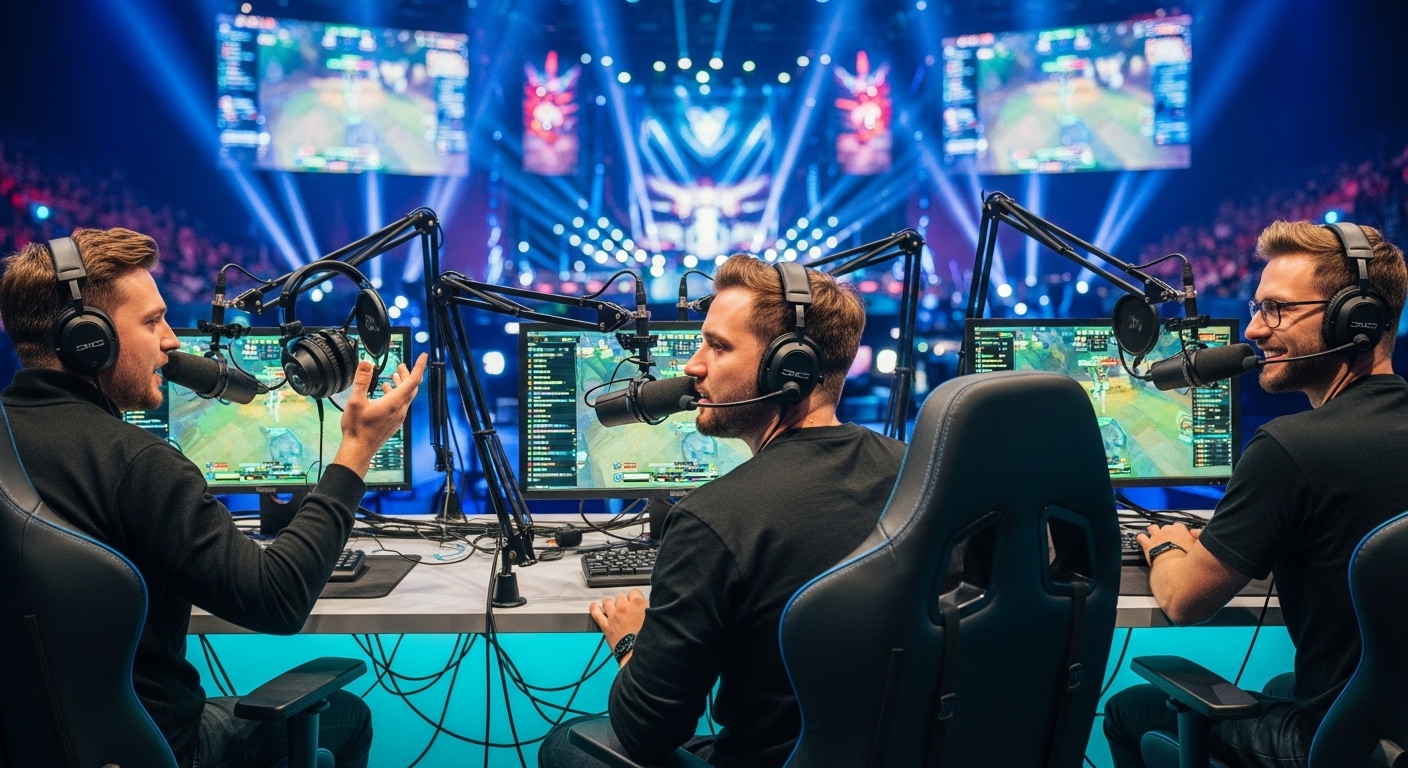
The Middle East’s esports story used to be told in footnotes — a handful of local tournaments, a few passionate communities, and the occasional team that tried to break into bigger markets. In the space of a few short years, though, the region has leapt onto the main stage. Governments, sovereign funds, private publishers, local entrepreneurs and global tournament organizers are all investing in the area, turning stadiums, festivals and policy frameworks into a powerful ecosystem that’s reshaping how competitive gaming grows worldwide.
Below I map that journey: where the growth is coming from, who the big players are, what life looks like for local talent, the social and political complexities, and what to watch next.
From grassroots cafés to stadiums: a quick origin story
Esports in the region began, like in many places, in internet cafés and small LAN events. Cities such as Cairo, Amman, Beirut, and Casablanca supported vibrant local scenes for years — communities that produced talented players for FIFA, Dota, Counter-Strike and mobile titles long before the region caught the eye of big-money investors. Over the last decade those bottom-up communities were complemented by top-down initiatives: national federations, government-backed events, and private funds that suddenly saw gaming as a lever for jobs, tourism and soft power.
That shift — from hobbyist culture to a recognized industry — is the foundation of the region’s rapid rise.
The headline-makers: Saudi Arabia and the Gulf
When people talk about the Middle East’s esports surge, Saudi Arabia is usually the first name on the list. Riyadh has become the region’s flagship, staging multi-week festivals with prize pools and lineups that rival the largest global events. What started as Gamers8 evolved into the Esports World Cup and other large-scale ventures, with organizers and state-backed funds plowing unprecedented sums into events, infrastructure and studio-building. These initiatives aren’t small PR plays: they’re national strategy. Saudi entities are using esports as part of broader economic diversification plans and cultural-sector investments. Wikipedia+1
The Gulf more broadly — UAE, Qatar and Bahrain included — has also leaned hard into gaming and esports. Dubai and Abu Dhabi host major festivals and global finals, they’ve built arenas and incubators, and local governments are positioning their cities as regional hubs. The Dubai Esports & Games Festival, for instance, has become a recurring large-scale event attracting tens of thousands of attendees and multiple tournament formats each year. These city-led, tourism-oriented festivals show how esports in the Gulf is being used both to develop talent and to draw international visitors. Dubai Esports Festival 2025+1
How big is “big”? Market size and investment
Numbers help frame the scale. Market research firms have tracked rapid growth in gaming and related digital entertainment across the Middle East. The broader Middle East gaming market was measured in the multiple billions of dollars and expected to grow at a strong compound annual growth rate, with mobile gaming forming the lion’s share of the audience. That trajectory is mirrored by rising prize pools and event budgets: multi-million and, in some headline cases, multi-tens of-million-dollar prize pools are now publicized for single festivals. These figures make the region attractive to publishers, event operators and venture capital. Grand View Research+1
(Short note on the numbers: different reports use slightly different geographies and definitions — “Middle East”, “MENA”, or “GCC” — so you’ll see variation in reported totals. Still, the trend is uniform: fast growth, strong government backing, and a young, digitally native population.)
Who’s invested and why
Investment in the region’s ecosystem comes from several buckets:
- Sovereign and state-linked funds: Entities connected to national wealth funds and sports strategy are major backers. Some fund activity has included acquiring or partnering with international publishers and studios. These moves are intended to seed domestic game development, build event infrastructure, and attract global talent. Reuters+1
- Event organizers and publishers: Global tournament organizers (ESL/ESL FACEIT, Riot, BLAST, etc.) have worked with local organizers to bring international events or region-specific leagues to the Gulf and the wider MENA region. This co-operation has professionalized regional circuits and given local players a clearer route to global stages. Liquipedia
- Local startups and media companies: A rising class of regional agencies, tournament operators, content creators and production houses has sprung up, often focused on Arabic content, local talent development and festival production.
- Private capital and strategic investors: Venture funds, sports franchises and traditional media groups are funding studios, esports teams and mixed entertainment formats (music + esports festivals).
Why the investment? Two main incentives: (1) audience scale — a huge youth population that plays mobile games and consumes digital content — and (2) strategic diversification: gaming fits neatly into tourism, events, tech employment, and the national ambition to be seen as modern cultural hubs.
Flagship events: festivals, stadiums and big prize pools
If you want a snapshot of the region’s ambitions, look at the scale of its events.
- The Esports World Cup / Gamers8 lineage: What began as a multi-week, multi-title festival evolved into the Esports World Cup — a multi-game spectacle with prize pools that rock headlines and a festival feel that blends concerts, consumer experiences and elite competitive play. These events have signaled that the region wants to host not only repeatable regional competitions but also global finals. Wikipedia+1
- Dubai Esports & Games Festival (DEF): This city-backed festival mixes local tournaments, exhibitor halls, workshops and some international competition. Attendance has scaled into the tens of thousands, demonstrating commercial viability for big-ticket, family-friendly gaming events in the Gulf. Dubai Esports Festival 2025
- Local arena and stadium builds: Governments and private companies are investing in physical venues — arenas and themed experience centers — that can host large LAN events and become permanent community hubs. These venues help professionalize production standards (stage design, broadcast capabilities, audience seating) to match global expectations. Ministry of Economy
The talent pipeline: players, teams and dev studios
Growth in tournaments and prize money is only meaningful if the region produces sustained talent and creative output. That’s starting to happen through several parallel paths:
- Local professional teams and orgs: Teams from across MENA are becoming more visible at international qualifiers and regional circuits. These clubs provide structure for coaching, salaries and player development — even if many still operate on tight margins compared to global heavyweights.
- Grassroots routes: LANs and university circuits: Universities, local LAN venues, and smaller festivals are feeding talent upward. Local challengers and open tournaments help surface players who then get scouted for franchises or invited to bootcamps.
- Game development and studios: Investments into studios and publishing (including major strategic deals) are intended to grow local IP creation. The presence of local studios helps create jobs beyond playing — designers, server engineers, QA, and production crews. savvygames.com
- Publisher engagement and localized services: Publishers are localizing games, launching regional servers, and running localized competitive ladders. That reduces latency, increases player satisfaction and grows the audience for locally organized esports. Riot’s expansion for MENA players is one example of how publishers are engaging directly. Riot Games
Mobile: the engine of the region
Across the Middle East, mobile gaming rules. Smartphone penetration is high, and many players never transition to PC or console ecosystems. That means mobile esports titles — whether PUBG Mobile, Free Fire, eFootball/EAFC, or mobile MOBAs — are often the most visible, sustainable competitive formats. Tournaments for mobiles can scale quickly and attract sponsors who want to reach younger demographics via mobile-first activations.
This mobile-first reality shapes the whole ecosystem: content formats, talent recruitment, broadcast orientation and sponsorship propositions.
Women, inclusion and representation
One of the more heartening trends is the growing visibility of women in regional esports. Participation rates vary by country and culture, but in many places the number of female players and content creators is rising. Event organizers and some national federations have experimented with women-only competitions and “safe zone” programming to encourage participation where social norms make mixed public participation difficult for some players. At the same time, high-profile female streamers, pro players and founders are challenging stereotypes and demonstrating that competitive gaming is not a male-only space. Arab News+1
That said, progress is uneven. Cultural, familial and regulatory factors still limit participation in parts of the region. Addressing this gap is both a social and business opportunity: more inclusivity enlarges the audience and talent pool.
Sponsorships, brands and monetization
Brands are following eyes. Sponsorship activations in the region include non-endemic players (telecoms, airlines, banks) and endemic brands (PC manufacturers, peripheral makers, studios). Many brand deals come packaged as festival naming rights, team sponsorships, on-site experiential activations, and media buys around event broadcasts.
Monetization models are still maturing. Ticketing and sponsorship are immediate revenue lines, but long-term sustainability will depend on media rights, merchandise, local franchising models, and the growth of a local digital audience that engages with premium content.
Politics, soft power and the sportswashing debate
Large-scale sports and entertainment investments inevitably raise questions beyond economics. Critics argue that some investments in global sport and entertainment — whether football, F1, or esports — are part of “sportswashing” strategies: high-profile events that shift global narratives without addressing underlying human-rights concerns. Organizers and investors in the region counter that cultural soft-power investments create jobs, infrastructure, and new industries.
This debate isn’t unique to the Middle East, but for the region the scale of investment means the conversation is louder. International bodies, sponsors and fans are increasingly conscious of reputational risks, and that tension will continue to shape decisions by global event organizers and publishers. Reporting on these topics has highlighted both the investments and the attendant controversies. Reuters
Challenges on the road to maturity
Several headwinds could slow or complicate the region’s trajectory:
- Sustainability of funding: Many initiatives are driven by large, concentrated flows of capital. If priorities change, the ecosystem could face painful corrections. That’s a global industry risk but is heightened where state or sovereign funds dominate investment decisions.
- Local industry capacity: Producing consistent global-level events requires experienced production teams, talent managers, and broadcast professionals. Building that talent takes time and education pipelines.
- Regulatory and cultural friction: Differences in regulations for content, broadcasting, and inclusion can fragment the market. Cross-border competition and regional qualifications rely on predictable, harmonized governance.
- Player welfare and labor models: As teams professionalize, stable contracts, health provisions, career transition programs and dispute-resolution mechanisms become necessary. The industry must evolve its labor standards to match scale.
- Reputation and geopolitical complexity: International fans and brands may weigh the ethics of participation, which affects media rights and sponsor appetite.
Recognizing these challenges is the first step to solving them; stakeholders in the region are already investing in governance, education programs, and partnerships with experienced global operators to mitigate risk.
Real-world impact: jobs, tech and tourism
Beyond flashy tournaments, the esports push creates tangibles: jobs in production, event logistics, broadcasting, coaching, marketing and software engineering. Investments in local studios can spawn IP that outlives any single festival. Events bring tourists who spend on hotels, restaurants and city services. And for many young people, esports and gaming now look like a viable career path, whether as a pro player, content creator, shoutcaster, or developer.
Those multiplier effects — employment, skills, and tourism — are central to why governments back the industry.
What success looks like (and how the Middle East measures up)
If success were to be measured in three ways, they would probably be: a) a deep and domestic pipeline of talent that competes globally, b) a self-sustaining industry with diversified revenues (media rights, sponsorship, merchandise, game sales) rather than one reliant on one-off state funding, and c) a local creative economy that produces games and content with global reach.
The Middle East is already checking some boxes: global events, improved production quality, localized publisher investments, and studio formation. The trick is turning this initial momentum into a durable, diversified industry where domestic consumption and exports fuel long-term growth. Reports and market studies suggest the region is on a healthy growth trajectory, but achieving self-sustainment will take time and careful policy design. Grand View Research+1
Stories from the scene (people & startups to watch)
- Local founders and studios: Entrepreneurs building publishing and dev houses in Riyadh and Dubai are signing distribution and co-development deals with international partners, aiming to put MENA IP on the global map. These companies represent a shift from purely hosting to creating content.
- Female founders and streamers: Women in the region are building communities, media channels and event teams. Their stories matter because they broaden the industry’s creative base and marketing reach. Vogue Arabia
- Homegrown teams and players: Several MENA teams have begun to appear in international qualifiers and regional finals. These players bring the region visibility and help create local fanbases.
How international publishers and tournament organizers are responding
Publishers and global organizers aren’t ignoring the region. They are:
- Launching local servers and Arabic localization to improve technical experience and player acquisition.
- Co-producing events with local partners to adapt formats and sponsorships for regional audiences.
- Opening regional talent development programs and academy circuits that are tailored to local needs.
These moves reduce friction for local players to access global ecosystems and make the region more attractive for long-term publisher commitments. Riot Games+1
The fan experience: broadcasts, influencers and local culture
What’s noticeable on the ground is that esports in the Middle East is not just a spectator sport — it’s a social experience. Family audiences attend festivals, influencers shape local fandom in Arabic, and broadcasters invest in region-specific production styles. The result is a hybrid culture where international tournament formats are given a local voice, reflecting regional humor, commentary styles and musical tastes.
This cultural translation is important because esports succeeds when fans feel it’s “for them,” not just an imported spectacle.
Risks and ethical considerations
As the industry professionalizes, ethical considerations become more urgent. These range from labor practices and contractual fairness to human-rights implications when massive public-facing investments are used for soft power. Sponsors, international partners, and fans will continue to evaluate whether progressive social commitments accompany investment. Transparent governance, athlete protection policies, and independent dispute mechanisms will strengthen the region’s appeal to global partners.
What to watch next (short list)
- Esports World Cup and follow-ups: How the multi-title festivals evolve in format and frequency. Big prize pools and multi-game programming will continue to be a signal of intent. Wikipedia+1
- Local studio output: Are Riyadh and Dubai producing globally attractive games and IP, or primarily hosting? The former signifies deeper creative industry growth. savvygames.com
- Sustainability of funding: Are private and mixed models replacing purely state funding? A more diverse funding base is a marker of maturity.
- Talent export: Will more MENA players become regulars at top international tournaments?
- Inclusion metrics: Growth in women’s participation, female-led companies and gender-balanced viewership numbers.
Final thoughts: opportunity with responsibility
The Middle East’s rise in esports is one of the most interesting regional transformations in digital culture today. Ambition, money and youthful audiences have created a launchpad. The next phase — turning headline events into long-term industries that create jobs, produce local IP and build sustainable revenue models — will require care.
Stakeholders should emphasize local capacity building, fair labor practices, inclusive programming, and transparent governance. If they do, the region could become not just a host of spectacular events but a global hub for competitive gaming, content creation and digital entertainment.
Esports has always been a story about people as much as money: players, streamers, organizers, and fans. The Middle East now has the resources to write the next chapters. The question is whether the industry will use those resources to build an ecosystem that lasts.