

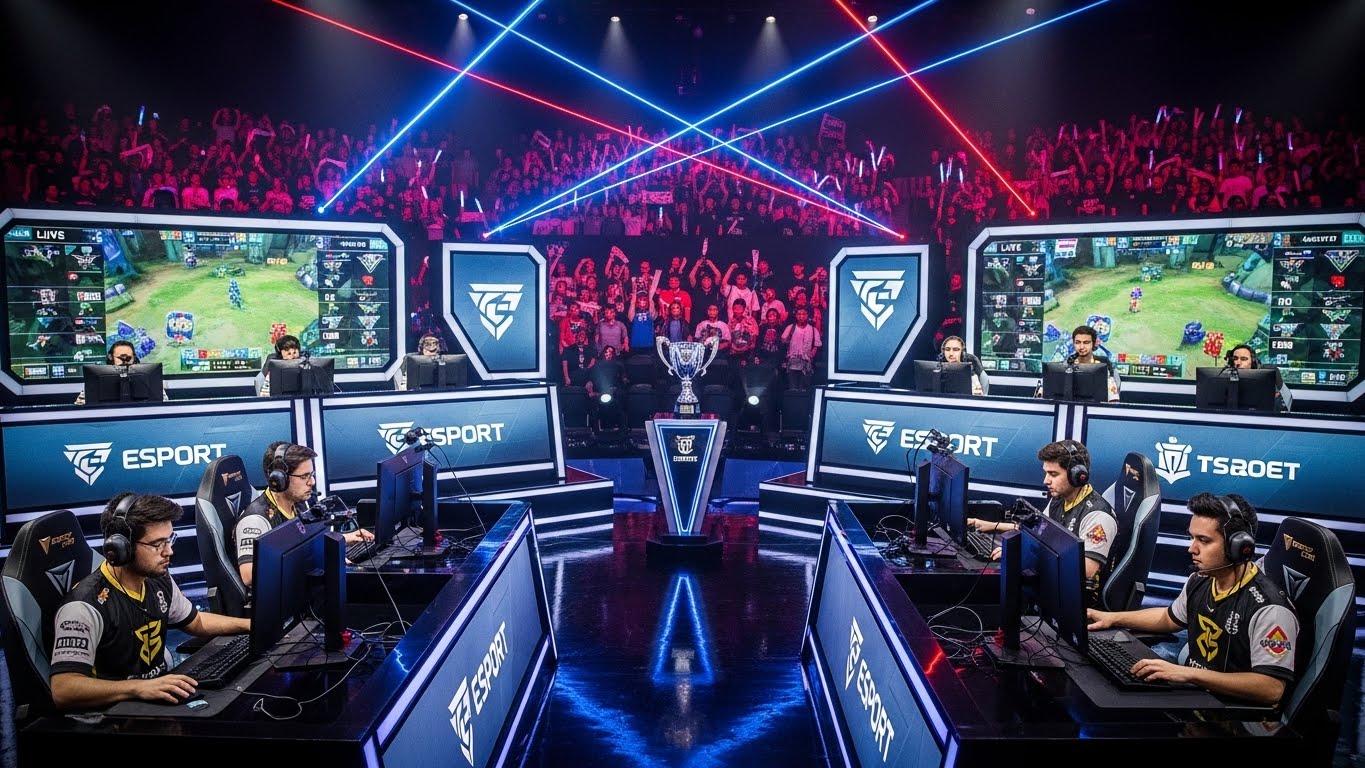
In the last decade, esports has transformed from a niche hobby into a worldwide competitive spectacle. Once a subculture relegated to small, local tournaments, esports now boasts massive global audiences, multimillion-dollar sponsorships, and professional leagues that rival traditional sports. Whether you’re a casual gamer, a competitive player, or someone who just watches the occasional event, esports is hard to ignore. In this blog post, we will dive deep into the world of esports, exploring its rapid growth, cultural impact, and its role in shaping the future of entertainment.
What is Esports?
At its core, esports refers to organized, multiplayer video game competitions, particularly between professional players, individually or as teams. The games involved are often highly strategic and competitive, with titles like League of Legends, Dota 2, Counter-Strike: Global Offensive, Fortnite, and Overwatch being the central pillars of the esports ecosystem. These games require not just individual skill but also team coordination, making them highly engaging for both players and spectators.
Esports is not limited to one game or genre; it spans a variety of game types, from first-person shooters to real-time strategy games and battle royales. This diversity is part of what makes esports so accessible and exciting for a broad range of audiences. The players, who often begin their careers as teenagers, can achieve global recognition, fame, and even substantial financial rewards.
The Rapid Growth of Esports
Esports’ growth trajectory has been staggering. From humble beginnings in local LAN (Local Area Network) parties and college competitions, it has rapidly blossomed into a billion-dollar industry. According to Newzoo, a market research company specializing in the gaming industry, the global esports industry was projected to generate over $1 billion in revenue in 2023. This figure includes revenue from media rights, sponsorships, ticket sales, and merchandise.
What was once considered an activity primarily for tech enthusiasts or “geeks” is now part of mainstream culture. Esports has gained the attention of major corporations, such as Coca-Cola, Intel, and even Adidas, all of which now sponsor tournaments and events. Traditional sports organizations, like the NBA and NFL, have also taken note and invested in esports, often launching their own leagues or partnering with gaming companies.
Streaming platforms like Twitch and YouTube have played a significant role in this growth. These platforms allow millions of fans to watch live tournaments, follow their favorite teams, and interact with players in real-time. In fact, many esports events now draw larger audiences than traditional sports, with some events, like League of Legends World Championship, attracting viewership numbers that surpass the Super Bowl.
Esports as a Career Path
While traditional sports have always provided clear career paths for athletes, esports has done the same for gamers, albeit in a relatively new and fast-changing industry. Professional esports players, also known as “pros,” can make a comfortable living, with top players earning millions in salary, sponsorships, and tournament winnings. These players undergo rigorous training schedules similar to traditional athletes. Success in esports requires not just talent but also discipline, teamwork, and mental fortitude.
In addition to players, the esports industry also supports a growing ecosystem of coaches, analysts, broadcasters, content creators, and event organizers. Many former professional gamers transition to roles like coaching or commentary, where they continue to shape the competitive scene. Esports has created a diverse set of opportunities that extend far beyond just playing games.
Moreover, esports education has become a legitimate career path. Universities across the globe now offer specialized esports degrees or certifications in game design, management, and broadcasting. This has led to the rise of collegiate esports leagues, where students can compete at a high level while pursuing their academic studies. Many collegiate programs now offer scholarships for talented gamers, much like traditional sports programs do.
The Cultural Impact of Esports
Esports’ impact extends beyond just the players and fans; it has become an integral part of popular culture. Esports tournaments are now held in massive arenas and broadcast to millions of viewers worldwide. The stage for these events is akin to a rock concert, with elaborate production values, live commentary, and a sense of spectacle that draws in not only gamers but also non-gamers who are captivated by the energy and excitement.
Esports has also influenced the development of gaming culture itself. Video game streaming has evolved into an entire subculture, where content creators like Ninja, PewDiePie, and Shroud have become household names. These influencers have large followings and serve as bridges between the gaming world and mainstream entertainment. The integration of esports into pop culture is evident in how video game-based themes are increasingly seen in movies, TV shows, and even fashion.
For younger generations, gaming and esports have become social activities. Platforms like Discord have allowed players to form communities, where they can discuss strategies, share tips, or simply hang out with friends. Competitive gaming has blurred the lines between online friendships and real-life relationships, fostering a global sense of community.
Furthermore, esports has had an important role in making gaming more inclusive. While gaming was once perceived as a solitary activity, it has become more accessible and social. Women, minorities, and people from diverse backgrounds are making their mark in esports, both as players and fans. This has led to the creation of more diverse gaming events, as well as increased support for underrepresented groups in the esports community.
The Future of Esports
As esports continues to grow, the future looks bright. One of the biggest areas of development is in the integration of virtual reality (VR) and augmented reality (AR). As these technologies mature, they have the potential to revolutionize how we experience competitive gaming. Imagine stepping into a virtual arena where you can compete alongside your teammates in a fully immersive environment—this could become a reality in the not-so-distant future.
Another area of growth is in the expansion of esports into new markets. While esports is already immensely popular in regions like North America, Europe, and South Korea, emerging markets in Asia, Africa, and South America are beginning to see a surge in esports adoption. As internet infrastructure improves and mobile gaming becomes more widespread, these regions will likely contribute to the continued growth of esports on a global scale.
The convergence of traditional sports and esports is also something to watch. Already, traditional sports organizations like the NBA have partnered with esports leagues to create synergy between the two. The 2022 FIFA eWorld Cup, for example, showcased how the worlds of sports and gaming can intersect. It’s likely that we will see even more collaborations between the two sectors, leading to a blurring of the lines between conventional sports and esports.
Finally, the rise of esports as an Olympic event is a topic that has been discussed for several years. While esports has not yet been included in the official Olympic Games, there have been discussions about its potential inclusion in the future. The International Olympic Committee (IOC) has acknowledged the growing popularity of esports and has held various esports competitions under its banner, including the Olympic Virtual Series. If esports does eventually become an Olympic event, it could further cement its place as a major cultural and competitive force.
Conclusion
Esports is no longer just a hobby or a fringe activity—it has become a global entertainment phenomenon. With massive audiences, lucrative sponsorships, and a growing community of professional players, esports is poised to continue its meteoric rise. The industry’s impact on gaming culture, career paths, and the global entertainment landscape cannot be overstated. As technology advances and new innovations shape the future of gaming, esports will undoubtedly continue to evolve, bringing even more excitement, competition, and community to the world of gaming.
Esports has proven that competitive gaming is here to stay. Whether you’re a passionate player, an avid fan, or a casual observer, the world of esports offers something for everyone. As the industry grows, we can expect even more thrilling moments, captivating storylines, and opportunities for people to become part of the esports phenomenon. The future of esports is incredibly bright, and its influence will only continue to expand in the years to come.