

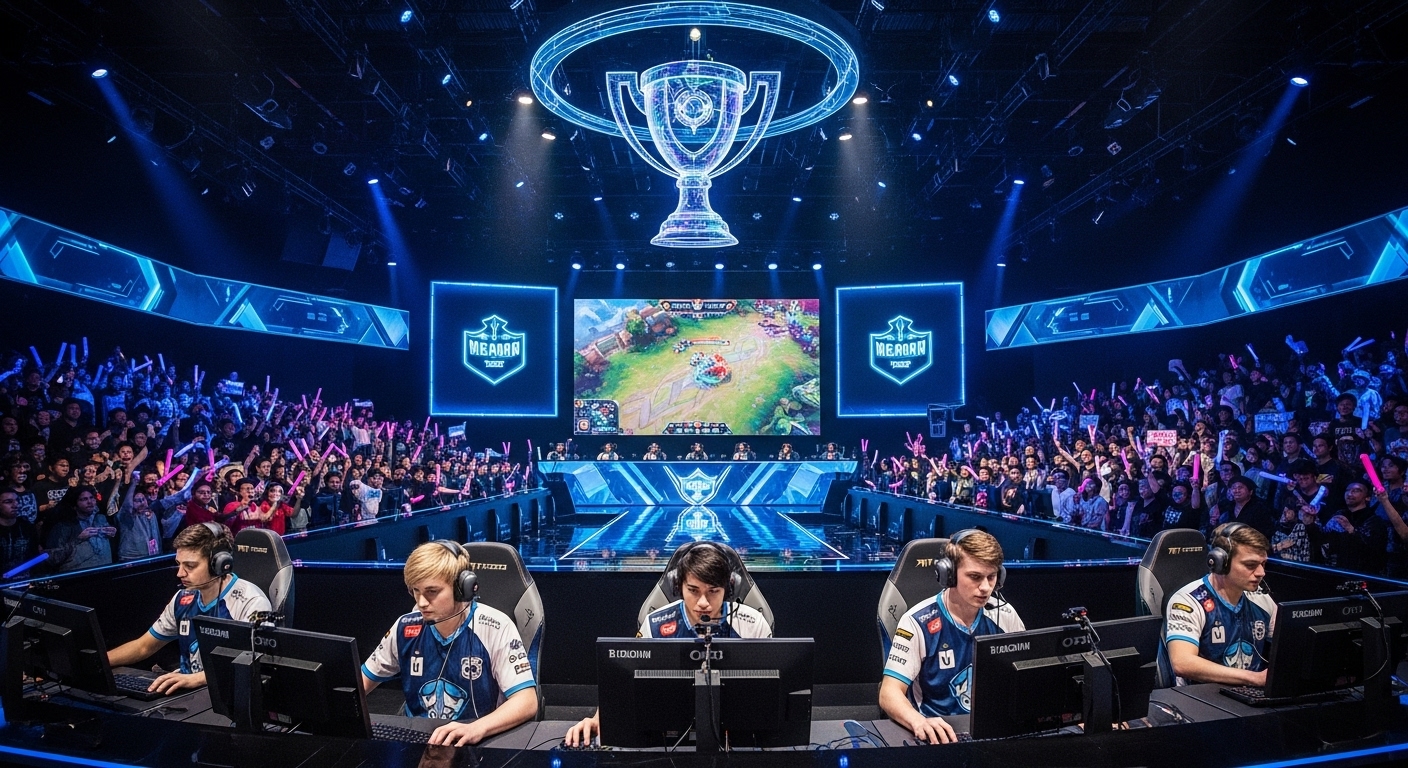
In recent years, esports has evolved from a hobbyist activity to a global entertainment juggernaut. What was once a niche interest for a small group of dedicated gamers is now a billion-dollar industry, with millions of players, fans, and spectators worldwide. The growth of competitive gaming has changed the way we view sports and entertainment, making it one of the fastest-growing sectors in the global economy. But what exactly is driving the explosive rise of esports, and how has it managed to captivate such a vast and diverse audience?
In this blog post, we will dive deep into the world of esports, exploring its origins, growth, and the factors that have contributed to its widespread popularity. We will also look at the future of the industry and its impact on traditional sports, culture, and society as a whole.
What is Esports?
Esports, short for electronic sports, refers to organized, multiplayer video game competitions, often involving professional players, teams, or organizations. These competitions can take place on various platforms, including PC, console, and mobile devices, and feature a wide variety of games. Popular genres in the esports ecosystem include Multiplayer Online Battle Arenas (MOBA) like League of Legends and Dota 2, first-person shooters (FPS) like Counter-Strike: Global Offensive and Overwatch, battle royale games like Fortnite, and real-time strategy (RTS) games like StarCraft II.
Esports events, which can range from small local tournaments to large international competitions, are often broadcast live online, reaching millions of viewers through platforms like Twitch, YouTube, and Facebook Gaming. These tournaments not only feature high-level gameplay but also draw in fans who support their favorite teams and players, creating a vibrant community around competitive gaming.
The Beginnings of Esports: From Arcades to Online Tournaments
While esports as we know it today is a modern phenomenon, its roots can be traced back to the early days of video gaming. The concept of competitive gaming began in the 1970s, with arcade games like Pong and Space Invaders offering players a chance to compete for high scores. However, these early games lacked the infrastructure needed to organize large-scale competitions or tournaments.
The real birth of esports came in the 1990s when the internet and LAN (local area network) gaming allowed players to connect with each other remotely. This created the foundation for the first online gaming communities, and competitive gaming began to take shape. The Quake series, released in the mid-1990s, was one of the first games to host significant competitive events. In 1997, the Red Annihilation tournament for Quake marked one of the first major esports competitions, attracting players from around the world.
As internet speeds improved and online gaming became more accessible, competitive gaming gained popularity. In the early 2000s, organizations like the World Cyber Games (WCG), founded in 2000, and Major League Gaming (MLG), founded in 2002, began hosting large-scale tournaments. These events attracted players and viewers from all corners of the globe and set the stage for the massive esports industry we know today.
The Evolution and Growth of Esports
Esports has undergone a significant transformation over the past two decades. Several key factors have contributed to its rapid rise, making it one of the most exciting and dynamic industries in the world.
1. Advancements in Technology
The rapid advancement of technology has been a driving force behind the rise of esports. As gaming hardware and software continue to improve, players are able to experience higher-quality graphics, smoother gameplay, and more immersive environments. The development of high-performance gaming PCs, faster internet speeds, and improved gaming consoles has made it easier for players to compete at the highest levels.
In addition to hardware improvements, platforms for streaming and broadcasting gameplay, such as Twitch, YouTube Gaming, and Facebook Gaming, have allowed esports to reach a global audience. Viewers can watch live tournaments, interact with players, and even engage in real-time conversations, creating a unique and highly interactive viewing experience.
2. The Role of Streaming and Social Media
One of the key factors in the growth of esports has been the rise of live streaming and social media platforms. Twitch, which was launched in 2011, revolutionized the way gamers share and consume content. It allowed players to broadcast their gameplay to a global audience, creating a new form of entertainment and establishing a direct connection between players and fans.
In addition to live-streaming, social media platforms like Twitter, Instagram, and Reddit have played a vital role in building and maintaining the esports community. Players, teams, and organizations use these platforms to engage with their fanbase, share behind-the-scenes content, and promote upcoming events.
Streaming services have not only allowed fans to follow their favorite players but have also enabled many professional gamers to build personal brands and turn their passion for gaming into lucrative careers. Influencers and content creators like Ninja, Shroud, and Pokimane have become household names, earning millions of dollars through sponsorships, donations, and partnerships.
3. Sponsorship and Corporate Investment
As esports gained in popularity, it attracted significant investment from corporate sponsors, mainstream media outlets, and traditional sports organizations. Companies like Intel, Coca-Cola, Red Bull, and Nike have all invested heavily in esports, sponsoring teams, players, and major events. These sponsorships provide essential funding for tournaments and allow esports organizations to scale their operations, improve player development, and build better infrastructure.
Corporate investment has also helped bridge the gap between esports and traditional sports. Many major sports teams and organizations, including NBA franchises like the Philadelphia 76ers and Los Angeles Lakers, have invested in esports teams or tournaments. These partnerships have helped to legitimize esports as a professional sport and have introduced a new level of mainstream appeal to the industry.
4. The Growth of Mobile Gaming
While PC and console gaming have traditionally dominated the esports scene, mobile gaming has become a major player in recent years. In regions like Southeast Asia, Latin America, and India, where access to high-end gaming PCs or consoles may be limited, mobile gaming has become a widely accessible and popular alternative.
Games like PUBG Mobile, Free Fire, and Clash Royale have taken the esports world by storm, offering competitive tournaments with substantial prize pools. Mobile esports is expected to continue its growth in the coming years, as smartphone technology advances and more players join the competitive scene.
Esports Games and Major Tournaments
The esports ecosystem is built around a variety of games, each with its own competitive scene and fanbase. Some of the most popular games in the world of esports include:
1. League of Legends (LoL)
League of Legends is one of the most popular and influential games in the world of esports. Developed by Riot Games, LoL is a Multiplayer Online Battle Arena (MOBA) game where two teams of five players each compete to destroy the enemy’s Nexus, located in their base. The game’s fast-paced action, strategic depth, and regular updates have kept it at the forefront of competitive gaming since its release in 2009.
The League of Legends World Championship, held annually, is one of the largest esports events in the world, attracting millions of viewers and offering a prize pool worth millions of dollars. The event features top teams from around the globe, showcasing the best of what LoL esports has to offer.
2. Dota 2
Dota 2, developed by Valve Corporation, is another highly popular game in the esports community. Like LoL, it is a MOBA where teams of players work together to destroy the enemy’s base. Dota 2 is known for its strategic depth and complex gameplay mechanics, which require a high level of coordination and skill.
The International, Dota 2’s flagship tournament, is famous for its massive prize pool, which regularly exceeds $30 million. The tournament has become a symbol of competitive gaming and is one of the most-watched esports events in the world.
3. Counter-Strike: Global Offensive (CS:GO)
Counter-Strike: Global Offensive (CS:GO) is one of the most iconic first-person shooter games in esports history. Developed by Valve, the game pits two teams against each other, with one side trying to plant a bomb while the other tries to prevent it. The game is known for its strategic depth, fast-paced action, and emphasis on teamwork.
The CS:GO Major Championships are some of the most prestigious tournaments in esports, offering large prize pools and attracting top-tier teams from around the world.
4. Fortnite
Fortnite is a free-to-play battle royale game developed by Epic Games. Since its release in 2017, it has become a cultural phenomenon, attracting millions of players and viewers. The game’s unique blend of building mechanics and fast-paced combat has made it a favorite in the esports world, with events like the Fortnite World Cup offering massive prize pools.
The Future of Esports
The future of esports looks incredibly bright. As the industry continues to grow, we can expect to see further integration with traditional sports, more corporate investment, and an increased focus on mobile gaming. Virtual reality (VR) and augmented reality (AR) could also revolutionize the way esports is played and viewed, offering more immersive and interactive experiences for players and fans alike.
Esports is no longer just a hobby—it’s a global industry that is here to stay. As more fans tune in to watch their favorite players and teams, esports will continue to reshape the entertainment landscape and leave a lasting impact on global culture.