

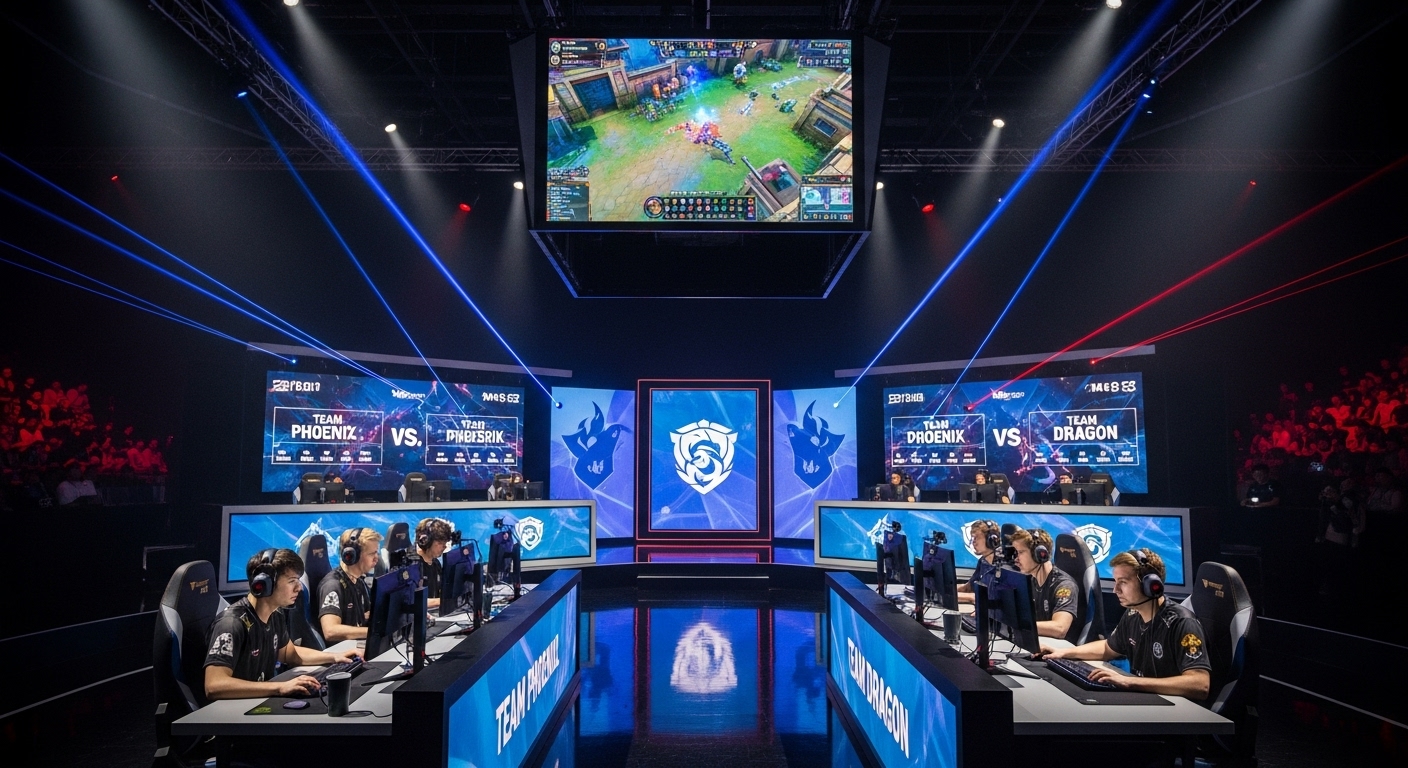
Introduction: The Emergence of a Digital Sport
Esports, or electronic sports, has grown from a niche hobby into one of the most influential industries in modern entertainment. Once seen as a pastime for hobbyists, esports is now recognized as a legitimate competitive platform where professional players train rigorously, fans gather in massive arenas, and global tournaments generate millions of viewers. The growth of esports reflects not only technological advancements but also a shift in societal perceptions of gaming. It has redefined what it means to compete, transforming digital gameplay into a professional, organized, and highly lucrative pursuit.
Early Beginnings: From Arcade Competitions to Online Play
The origins of esports can be traced back to the 1970s and 1980s when players competed in arcade games like Pong and Space Invaders. These early competitions were small-scale and informal, often offering modest prizes such as subscriptions to magazines or free tokens for arcade machines. Despite their simplicity, these contests laid the foundation for organized competitive gaming.
The 1990s brought a technological revolution with the rise of personal computers and the internet. Multiplayer games like Doom, Quake, and Warcraft allowed players to connect online, creating communities and competitions that transcended physical locations. LAN parties became a cultural phenomenon, where players would bring computers together to compete in high-stakes matches. By the early 2000s, titles like StarCraft and Counter-Strike had established the first true professional esports scenes, complete with fan followings and structured tournaments.
The Mainstream Explosion: Esports Goes Global
The 2010s marked a turning point for esports, pushing it into mainstream culture. Games such as League of Legends, Dota 2, and Fortnite became global sensations, attracting millions of players and viewers. Major tournaments offered record-breaking prize pools, sometimes exceeding tens of millions of dollars, rivaling traditional sports competitions.
The rise of streaming platforms revolutionized viewership. Platforms allowed fans to watch live matches, follow their favorite players, and engage with the gaming community. Professional esports players became celebrities, drawing sponsorships from major corporations and partnerships with brands that previously focused on traditional sports. Esports became not just a hobby, but a highly organized industry with worldwide reach.
Professional Players: The Athletes of Esports
Professional esports players dedicate immense time and effort to hone their skills. Unlike casual gamers, these players follow strict training schedules, practice strategies with their teams, and analyze gameplay to maintain a competitive edge. Success in esports requires precision, quick decision-making, teamwork, and mental resilience.
Most professional players start young, often in their teens. By their early twenties, top-tier players can achieve global recognition, sponsorship deals, and substantial earnings. However, the career lifespan of an esports player is often limited due to physical strain, mental burnout, or changes in game popularity. Organizations now place a stronger emphasis on player health, well-being, and sustainable career development, ensuring athletes can compete at high levels without compromising their long-term future.
Popular Esports Genres
Esports spans a variety of genres, each offering distinct challenges and fan bases:
Multiplayer Online Battle Arenas (MOBAs): Games like League of Legends and Dota 2 require strategic thinking, coordination, and precise execution. Teamwork is critical, and each match offers a unique tactical challenge.
First-Person Shooters (FPS): Titles such as Counter-Strike: Global Offensive, Valorant, and Call of Duty emphasize reflexes, accuracy, and tactical decision-making. Competitive FPS games often involve intense team strategies and fast-paced gameplay.
Battle Royale Games: Fortnite, PUBG, and Apex Legends popularized large-scale survival competitions. Players must combine strategy, combat skills, and adaptability to survive in constantly shrinking maps.
Sports Simulations: Games like FIFA and NBA 2K bring traditional sports into the digital realm. These simulations attract fans who enjoy both real-life sports and competitive gaming.
Fighting Games: Street Fighter, Tekken, and Super Smash Bros. highlight one-on-one competitions that test timing, precision, and technical mastery. These games maintain a passionate and dedicated community.
Each genre contributes to the diversity and vibrancy of esports, offering multiple avenues for players and fans to engage with the industry.
The Business Behind Esports
Esports has developed into a complex and lucrative industry. Teams and organizations earn revenue through sponsorships, merchandising, broadcasting rights, and live event ticket sales. Major brands invest heavily in esports to reach young, digitally engaged audiences, while tournaments attract global viewership, increasing the value of advertising and sponsorship deals.
Professional esports teams operate similarly to traditional sports clubs, with management, coaching staff, analysts, and marketing teams. Many organizations also diversify into content creation, social media engagement, and merchandise, ensuring that their brand remains profitable beyond the competitive scene. The economic growth of esports has made it a viable career path not only for players but also for those interested in media, production, marketing, and event management.
Technology and Streaming: The Lifeblood of Esports
Technology has been instrumental in esports’ growth. High-speed internet, advanced gaming hardware, and online platforms allow players to compete from anywhere in the world while connecting millions of viewers. Streaming has become a central feature of esports culture, allowing fans to watch live competitions, analyze strategies, and interact with professional players.
Emerging technologies such as virtual reality and augmented reality promise to take esports to new heights. Immersive viewing experiences may allow fans to feel as though they are part of the game, creating deeper engagement and expanding the possibilities of live events.
Education and Career Opportunities
Esports is increasingly recognized in educational and career contexts. Universities offer esports scholarships, programs, and degrees focused on game design, digital media, and event management. High schools are establishing esports clubs to teach teamwork, strategy, and problem-solving.
Beyond playing professionally, esports offers careers in coaching, broadcasting, analytics, production, and marketing. The industry combines technology, entertainment, and creativity, creating opportunities for diverse career paths that extend beyond the competitive scene.
Cultural Impact: Changing Perceptions of Gaming
Esports has transformed the way society views gaming. Once stigmatized as a solitary or unproductive activity, gaming is now recognized as a competitive, skill-based pursuit. Esports tournaments draw massive audiences, and players enjoy celebrity status comparable to traditional athletes.
Esports also fosters global connections. Players and fans from different countries and cultures unite over shared passion, forming communities that transcend borders. It has become a platform for social interaction, creativity, and identity, redefining the cultural significance of gaming.
Challenges Facing Esports
Despite its growth, esports faces challenges that could affect its sustainability. Player burnout is a major concern due to intense training schedules and pressure to perform.
The industry also lacks a unified governing body, leading to inconsistent rules, contracts, and competition standards. This creates opportunities for issues like cheating, match-fixing, and unfair practices. Diversity and inclusion remain a challenge, as female players and marginalized groups are underrepresented. Finally, economic sustainability is crucial, as revenue must be distributed in a way that supports both top-tier organizations and grassroots communities.
The Future of Esports
The future of esports is promising. Advances in technology, such as cloud gaming, artificial intelligence, and mobile gaming, will expand accessibility and enhance gameplay experiences. Virtual reality may provide immersive tournament experiences, changing how fans watch and interact with competitions.
Esports may also become more integrated with traditional sports and mainstream entertainment. Collaborative events with music, fashion, and film industries are already blurring the lines between gaming and broader cultural trends. As younger generations grow up with both digital and physical sports, esports will continue to redefine how we compete, play, and connect.
Conclusion: Beyond the Game
Esports has become much more than a form of entertainment. It is a global industry that combines competition, technology, culture, and community. Players, teams, and fans all contribute to a rapidly evolving ecosystem that continues to grow in scale and influence.
By redefining competition in the digital age, esports demonstrates the potential of technology to create new opportunities for connection, creativity, and achievement. The rise of esports is not simply a trend; it is a revolution, shaping the future of gaming, sports, and entertainment in profound ways.