

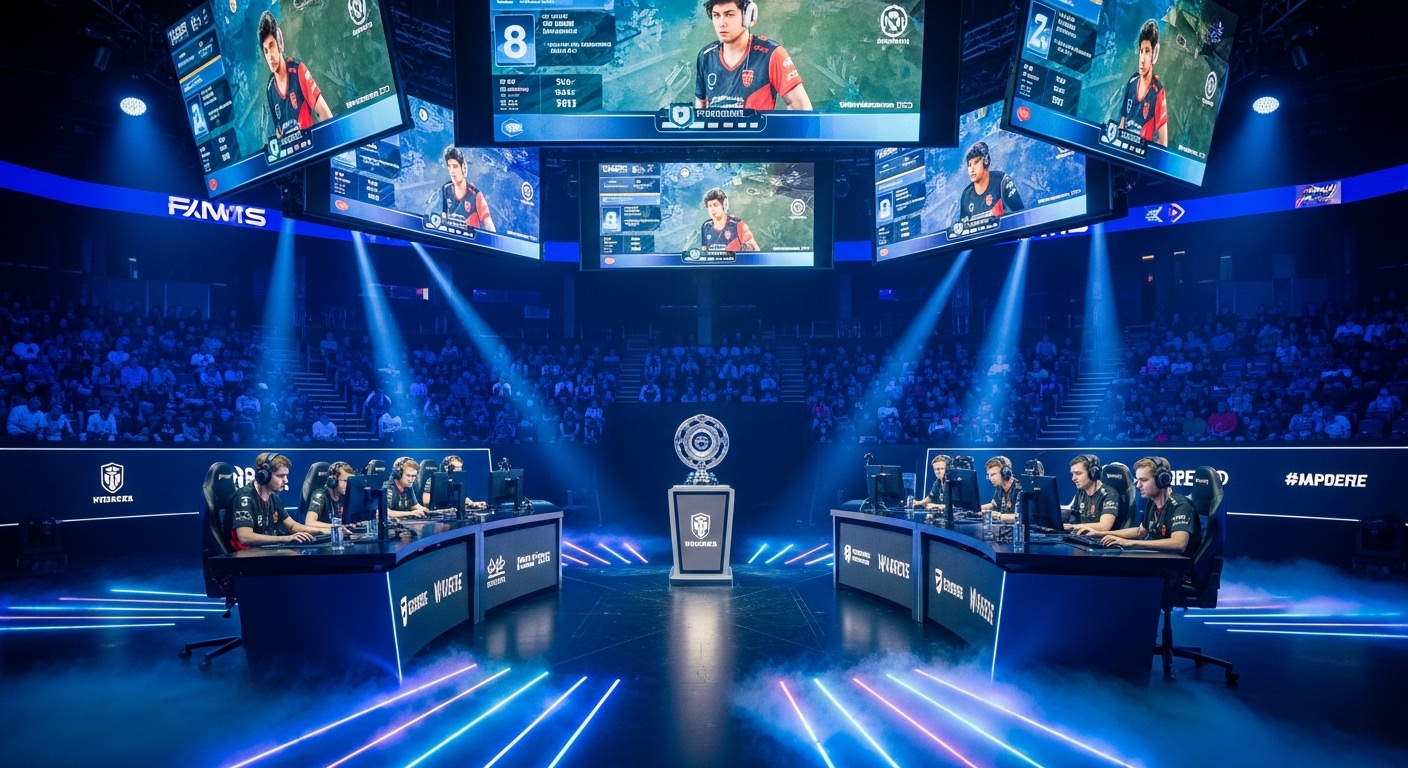
Esports, once a niche pastime for gamers, has rapidly transformed into a global phenomenon. What was once considered a hobby is now a multi-billion-dollar industry, drawing millions of viewers and offering lucrative careers to professional gamers. The world of esports has grown beyond simple competitions, now encompassing a wide array of games, diverse tournaments, and a vast ecosystem of teams, organizations, and brands. As esports continues to rise, it is not only changing the landscape of competitive gaming but also influencing the way we think about sports, entertainment, and digital culture. In this blog post, we will explore the evolution of esports, its massive growth, and the key factors shaping its future.
The Evolution of Esports: From Casual Games to Global Tournaments
The origins of esports can be traced back to the late 1990s and early 2000s, when competitive gaming began to take shape. Early tournaments, such as Quake and StarCraft, were hosted at local events, attracting small but dedicated communities of players and spectators. These events were largely informal, with players competing in LAN (local area network) parties, where gamers could connect their computers to compete against each other in real-time.
As the internet became more widely accessible and broadband speeds improved, online gaming took off. The advent of games like Warcraft III, Counter-Strike, and League of Legends brought with them the possibility of global competition. Players no longer needed to gather in the same room to compete—they could now connect to servers across the world, playing against the best from different countries and continents. This global reach marked a turning point for esports, as it allowed players to compete at a level of skill and intensity previously unheard of.
The mid-2000s saw the rise of major esports tournaments such as the World Cyber Games (WCG) and the Electronic Sports World Cup (ESWC), which attracted international attention and brought legitimacy to competitive gaming. The introduction of sponsorships and media coverage helped solidify esports as a professional industry, while games like Dota 2, League of Legends, and Counter-Strike: Global Offensive created a competitive ecosystem that continues to thrive today.
By the early 2010s, esports had grown into a fully fledged industry with its own infrastructure. Esports leagues, such as the Overwatch League and the League of Legends Championship Series, were created, offering regular seasons and tournaments with massive prize pools. Major gaming companies, streaming platforms like Twitch, and high-profile sponsors began to invest in the ecosystem, bringing esports into the mainstream.
Esports as a Professional Career: A New Path for Gamers
Today, esports is a legitimate career choice for players, coaches, analysts, streamers, and other professionals involved in the industry. Professional gamers now train full-time, often with structured coaching, fitness regimens, and team-building exercises designed to optimize their performance. These athletes participate in tournaments with six-figure prize pools and sign lucrative sponsorship deals with major brands.
Professional gaming is no longer confined to just a few standout titles; there are now competitive leagues and tournaments for virtually every genre of game. From first-person shooters (FPS) like Call of Duty and Counter-Strike to multiplayer online battle arena (MOBA) games like League of Legends and Dota 2, esports spans a wide variety of genres. This diversity allows for players to specialize in different games, much like traditional athletes specialize in specific sports.
Streaming platforms, particularly Twitch and YouTube Gaming, have become an essential part of the esports ecosystem, providing a platform for both established professionals and up-and-coming players to showcase their skills. Streamers who attract large followings can earn substantial income from advertising revenue, sponsorships, and donations from viewers. Some esports players have even gone on to build personal brands, creating content on social media and expanding their influence beyond the gaming world.
Coaching and team management have also become key components of the esports industry. As the level of competition increases, top teams and organizations are investing in dedicated coaches, analysts, and psychologists to improve their strategies and mental resilience. Like traditional sports, professional esports teams are now organized with a structure that includes management, training schedules, and team-building activities, further professionalizing the industry.
The Global Impact of Esports: Audience and Market Growth
The global reach of esports is one of the main factors contributing to its rapid growth. Esports tournaments are now broadcast live in multiple languages, with millions of viewers tuning in to watch their favorite teams and players compete. The popularity of esports events rivals that of traditional sports broadcasts, with tournaments such as The International (Dota 2’s world championship) attracting viewership numbers that rival major sporting events like the Super Bowl or the FIFA World Cup.
Esports’ global audience is also diverse. Fans of esports come from all corners of the world, with large followings in North America, Europe, Asia, and Latin America. In countries like South Korea, esports has become a national pastime, with players achieving celebrity status and government support for esports infrastructure. Similarly, China, one of the largest markets for esports, has produced some of the world’s most successful and popular teams, as well as major sponsorship deals for esports events and leagues.
The rise of esports has also given birth to a new generation of fans who consume content in different ways. Traditional sports fans may watch games on television or attend live events, but esports fans are increasingly relying on streaming services to engage with content. Platforms like Twitch have become community hubs where fans can watch live streams, interact with players, and join in the conversation. This direct interaction between fans and players is one of the defining features of esports, making it more immersive and engaging than traditional sports in many ways.
In terms of revenue, esports has seen explosive growth. According to recent reports, the global esports industry is projected to exceed $1.5 billion in revenue, with the bulk of this income coming from sponsorships, advertising, media rights, and merchandise sales. Major brands from outside the gaming world are flocking to esports, seeing it as an opportunity to connect with a younger, tech-savvy audience. Companies like Coca-Cola, Intel, Nike, and Red Bull are just a few of the global brands that have entered the esports scene through sponsorships, product placements, and partnerships with teams and events.
The Role of Esports in Education and Career Development
One of the most significant aspects of esports’ rise is its ability to provide new educational and career opportunities. High schools and universities around the world are beginning to offer esports programs, allowing students to train professionally, compete in tournaments, and even earn scholarships. Esports has become recognized as a legitimate extracurricular activity, with some colleges offering full-ride scholarships to top players, much like traditional sports.
Esports education is not limited to gaming itself; students involved in esports programs learn a wide range of skills, including teamwork, leadership, marketing, content creation, broadcasting, and event management. These skills are transferable to other industries, making esports a valuable avenue for personal and professional development.
In addition to traditional academic programs, esports has also led to the growth of specialized institutions dedicated solely to the sport. Esports academies are springing up around the world, offering intensive training programs for aspiring professional players. These institutions provide an environment where players can improve their skills, gain exposure, and make the transition from casual gamer to professional athlete.
Esports and Its Integration with Traditional Sports
Esports is increasingly seen as a complement to traditional sports rather than a rival. Many professional sports organizations and teams have started to invest in esports, with some even creating their own esports teams or sponsoring major esports events. For example, major sports leagues like the NBA and NFL have partnered with esports leagues to create competitive gaming experiences based on popular video games, such as the NBA 2K League.
The integration of esports with traditional sports is helping to expand the fan base for both. Younger fans who might not be as interested in traditional sports are being introduced to competitive gaming, while longtime sports fans are discovering esports through their favorite teams and players. As a result, both industries are benefiting from shared audiences and cross-promotion.
Esports and traditional sports also share many similarities. Both require a high level of skill, strategy, and mental fortitude. Like athletes in traditional sports, esports players undergo rigorous training and spend countless hours honing their skills. Both worlds also feature intense competition, where the best of the best compete for glory, recognition, and substantial financial rewards.
The Future of Esports: Innovation and Growth
The future of esports looks incredibly bright, with continued growth and innovation on the horizon. As technology advances, esports will continue to push the boundaries of what’s possible. The development of virtual reality and augmented reality could offer new ways for players and fans to experience esports, making it even more immersive and interactive.
Increased investment in infrastructure and technology will also play a major role in esports’ future. High-speed internet, better servers, and more advanced hardware will enable even higher levels of competition and performance. Additionally, esports tournaments will become more accessible, with online platforms providing opportunities for anyone to compete and watch from the comfort of their homes.
Esports is also poised to become a more integrated part of mainstream culture. With its growing audience, diverse player base, and rising mainstream appeal, esports will continue to attract major sponsors, media companies, and celebrities. Esports could even become a part of the Olympic Games in the future, with the International Olympic Committee already exploring the possibility of including esports in the Summer or Winter Games.